


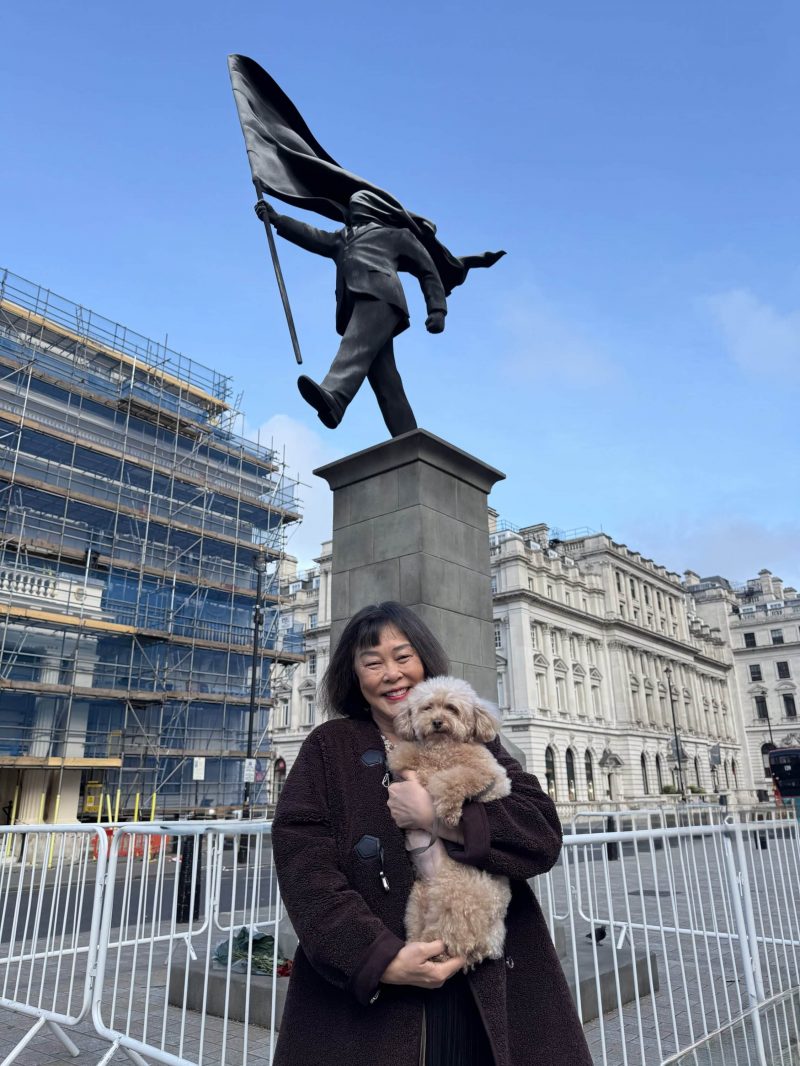
A statue that doesn’t quite stand still
There’s something thrilling about waking up in London and discovering that Banksy has been busy overnight. In Banksy style, no press release, no polite unveiling, just a quiet, slightly audacious drop into the city’s bloodstream.
This time, it wasn’t a stencil tucked onto a wall. It was bigger. Bolder. Harder to ignore.
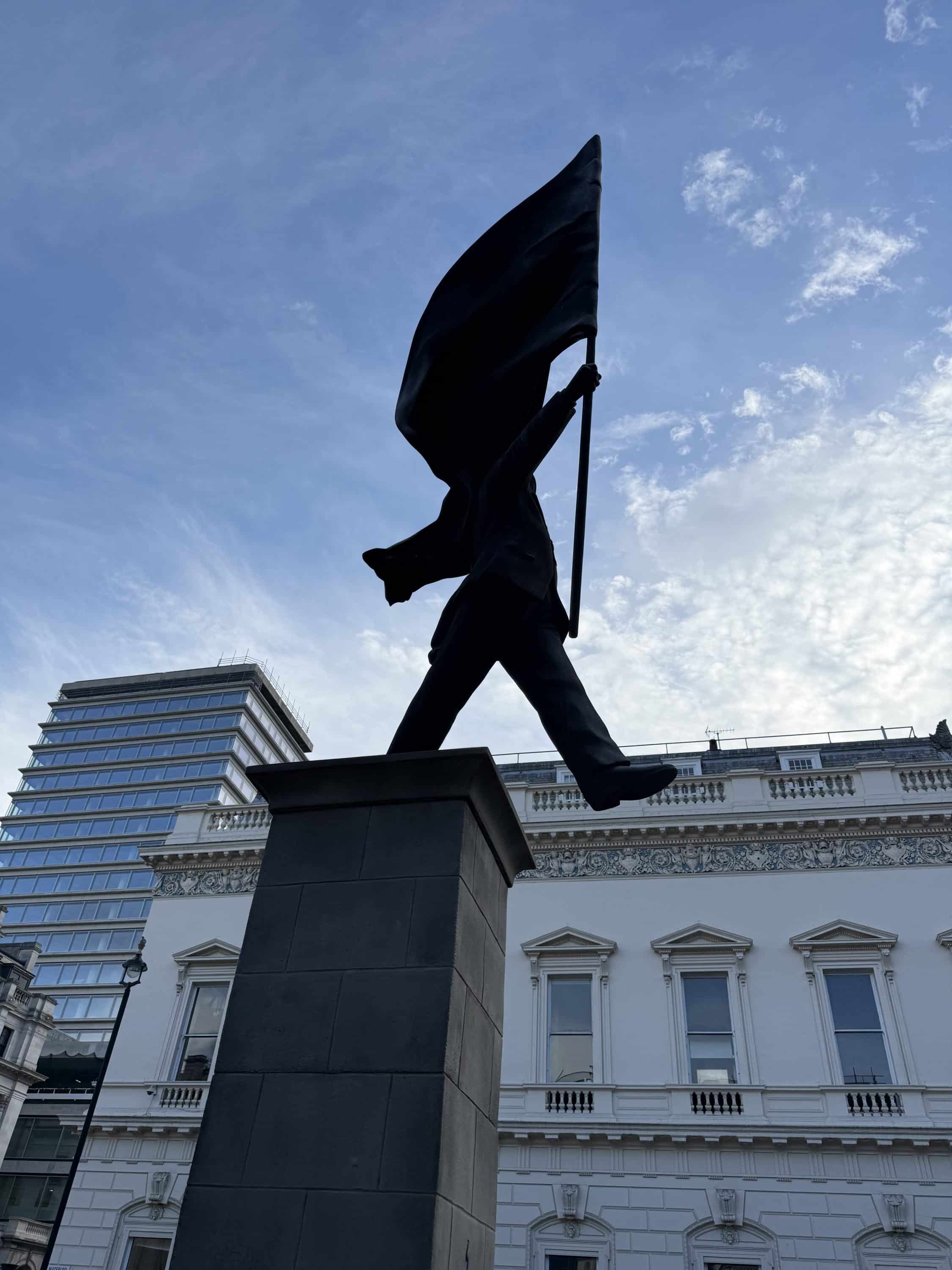
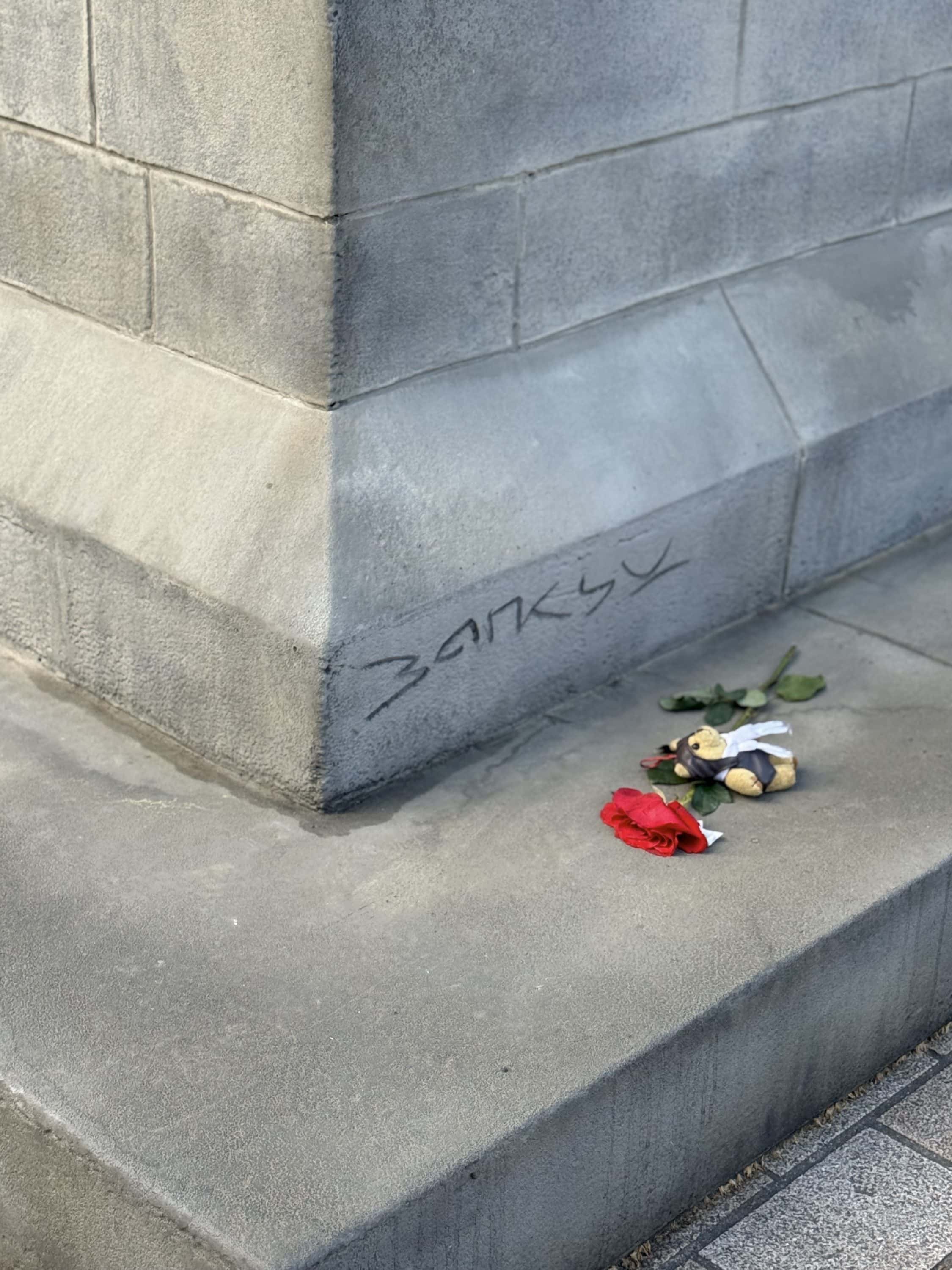
In the early hours of 29 April 2026, a full-scale statue appeared in Waterloo Place, Westminster, right in the company of Britain’s most traditional, establishment-approved monuments. By the next day, Banksy had confirmed it was his.
The statue is of a suited man, mid-stride, elevated on a plinth. He’s stepping forward off the pedestal. In his hands, he carries a large flag, billowing, dramatic, unmistakably symbolic. Except the flag is doing something rather inconvenient. It’s covering his face entirely. He cannot see where he’s going. And yet, he’s still moving forward.
The statue of a man in a suit looks like they’re meant to be in charge, someone whom others might follow.
He’s elevated, but unstable. In motion, but unaware. Symbolic, but directionless
It hints at a kind of leadership that performs certainty while lacking clarity.
This is where it gets interesting. The debates are, as always, brilliantly not singular.
Is it about blind patriotism? A man literally blinded by a flag feels like a pointed take on nationalism, particularly the kind that prioritises symbolism over substance. Pride becomes an obstruction. Identity becomes a blindfold.
Following without thinking? Is someone moving forward with absolute conviction and zero visibility?
The flag might not represent a nation. It might represent any idea we cling to so tightly that we stop questioning it. It could be politics, social media or whatever cause happens to be trending this week.
As for the location. It is probably also not by accident that it is at Waterloo Place, where it is lined with statues that celebrate empire, leadership, and legacy.
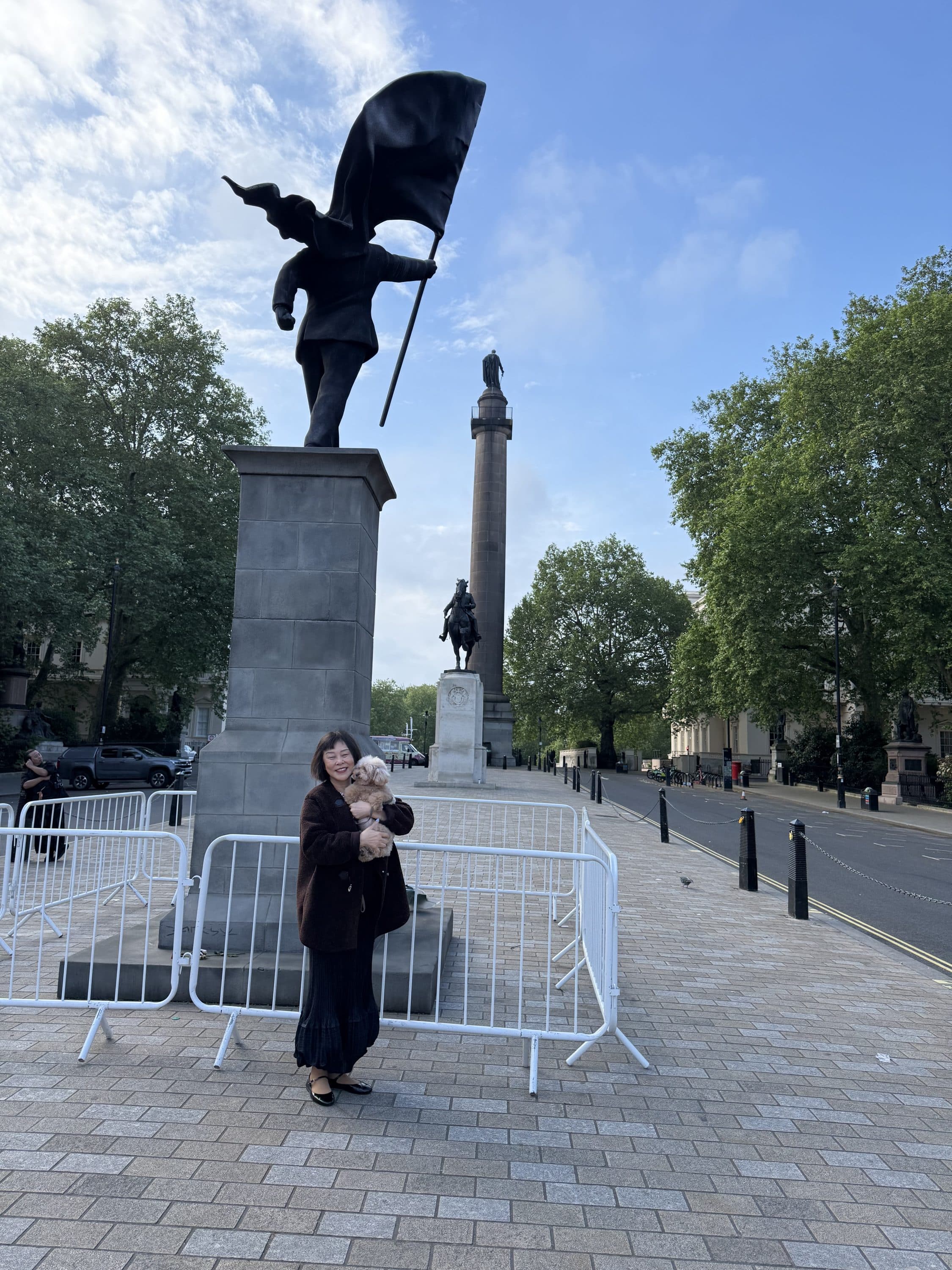
Among monuments that say, “look how far we’ve come,” this one quietly asks, “Do we actually know where we’re going?”
It doesn’t blend in. It interrupts. Dropping this piece here feels deliberate.
Is this Banksy’s commentary on society? There’s no slogan. No explicit target. It makes us asks some questions about ourselves:
- Do we follow ideas without fully interrogating them?
- Do we wrap ourselves in identities that feel safe?
- Do we just move forward because stopping feels harder?
A very Banksy kind of question.
A man stepping forward, confidently, while being completely unable to see.


