


Last week was Tihar, a five-day-long Hindu festival in Nepal. The second day of celebrations is called Kukur Tihar or Khichā Pujā (worship of the dogs).
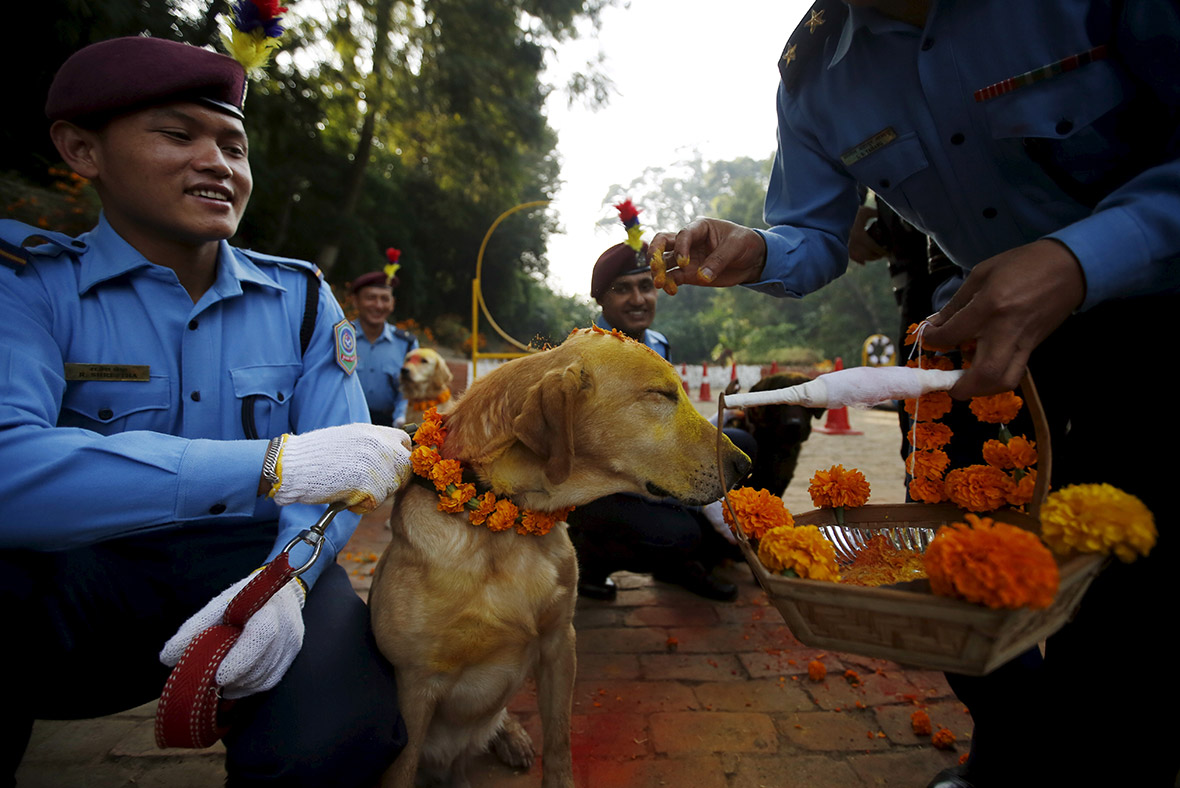 To celebrate Kukur Tihar , people offer blessings to dogs, the messengers of Yamaraj, the god of death.
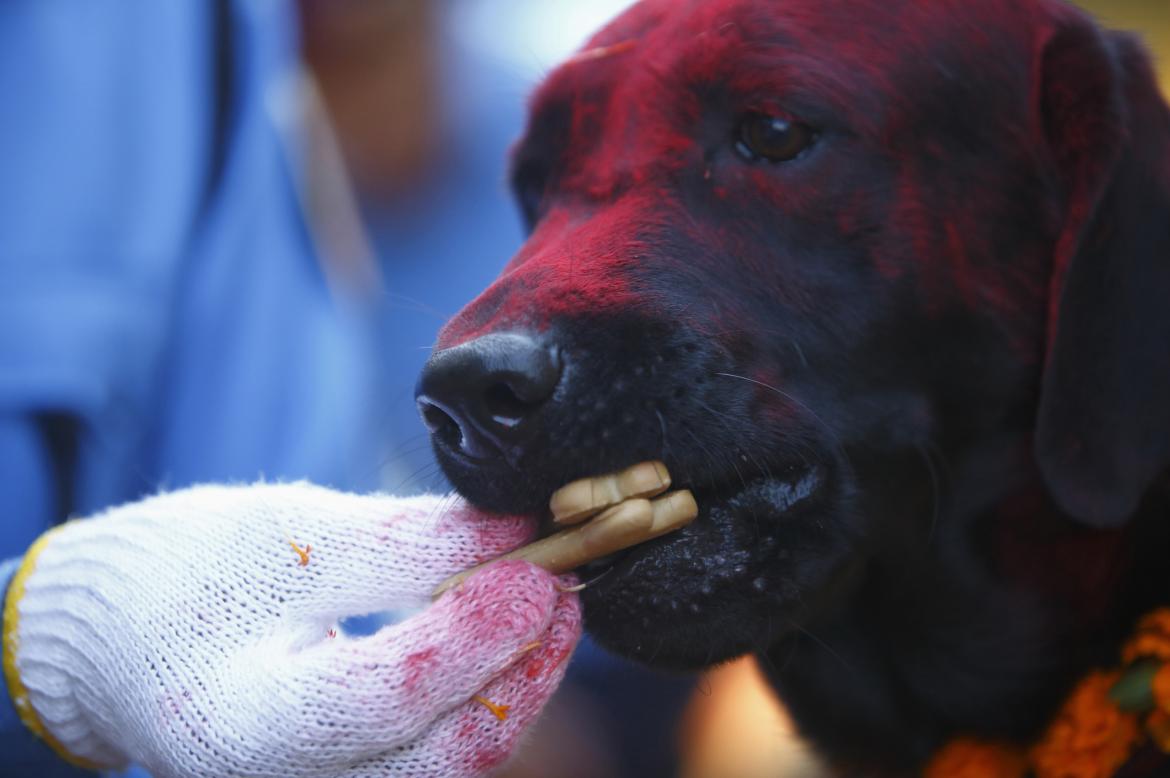
 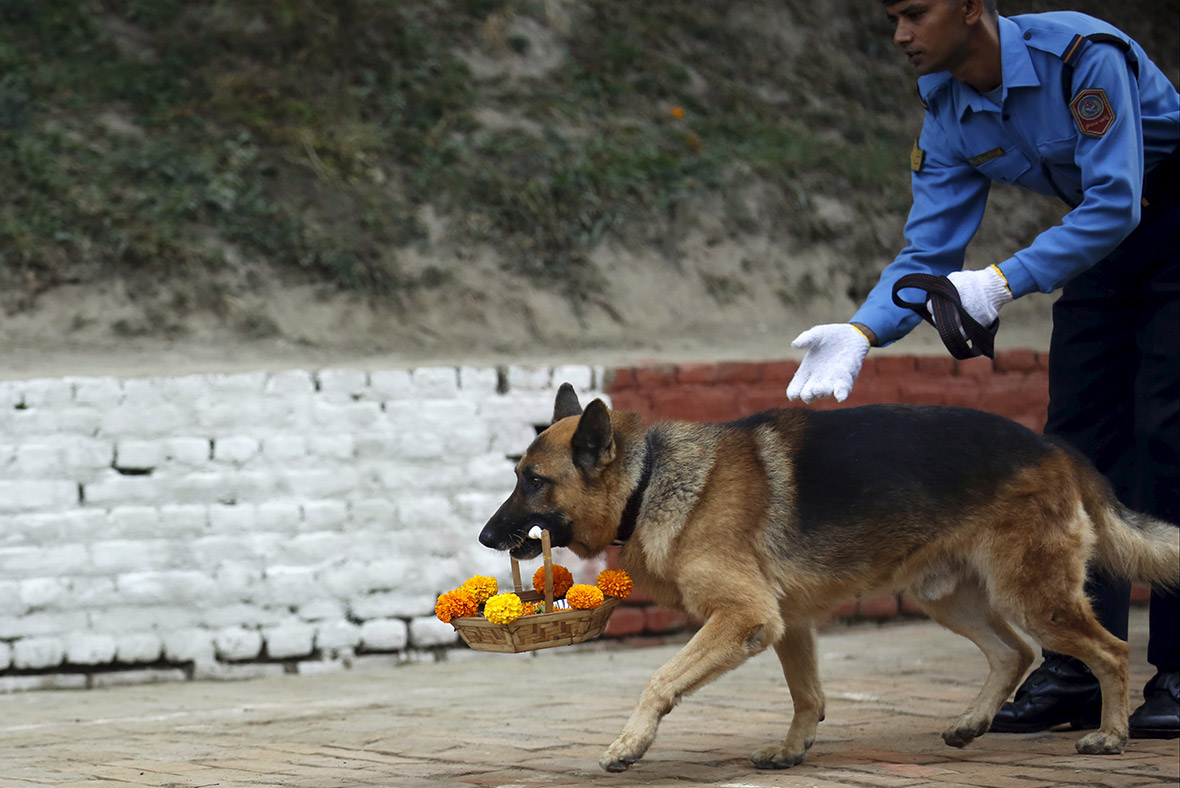 The dogs are also pampered and given treats.
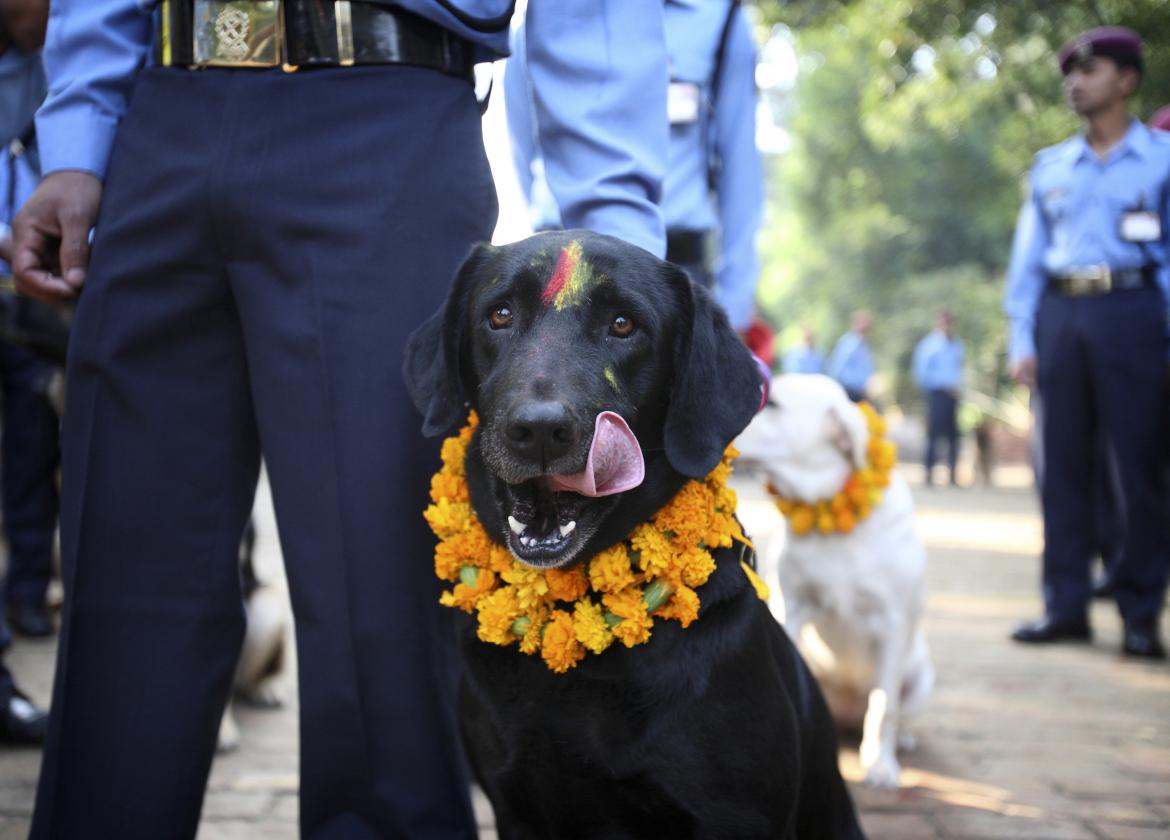 Yum! Yum! says this dog!
Nepalese police dog handlers decorate their dogs  with marigold garlands
 and vermillion powder.
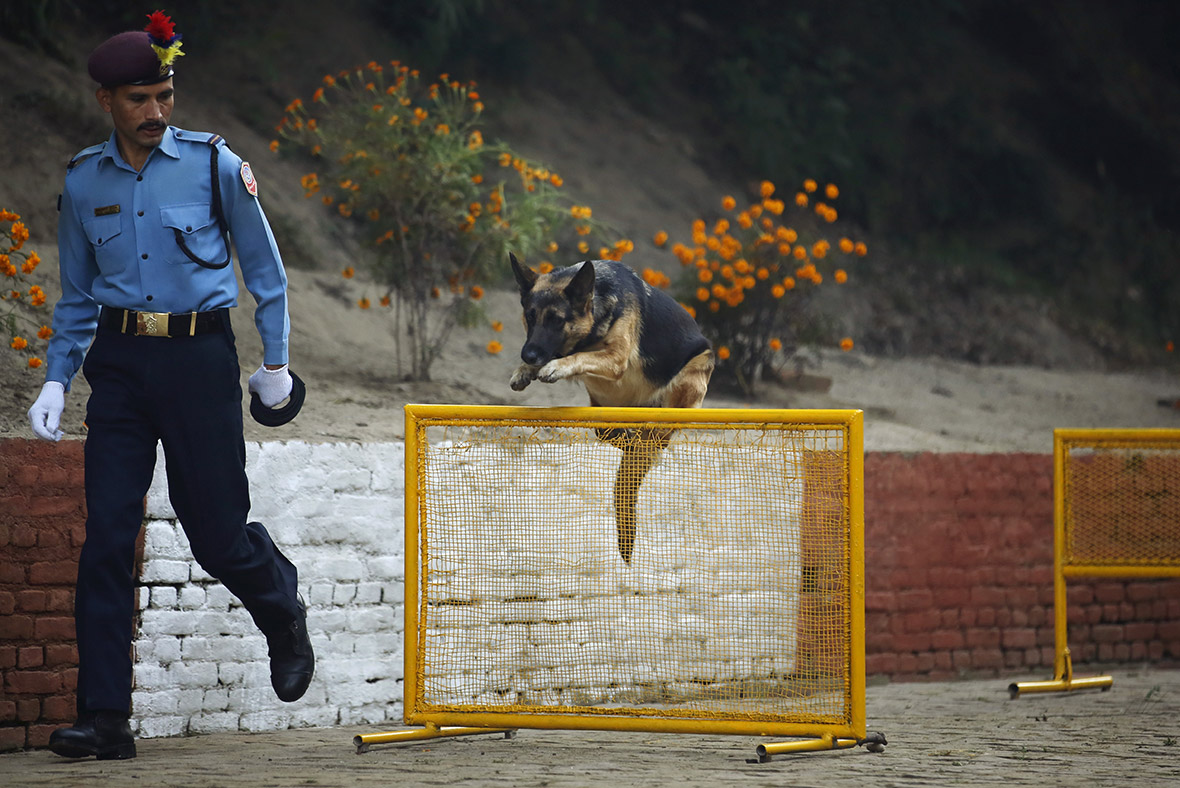
 The Napalese police also has competitions for their dogs – crikey! that’s a very high jump and short distance as well between jumps!!!!
 What a fab festival!
May’s comment: The Tihar Festival in Nepal is a five-day-long Hindu festival, similar to Divali/Deepawali celebrated in India, a regional variation. During the five-day festival, diyas are lit both inside and outside to illuminate the houses at night. These days show reverence to not just the humans and the Gods, but also to the animals like crows, cows and dogs. Animals are celebrated and worshipped. Dogs and cows are covered in garlands and colorful dyes. Police dogs have competitions and other ceremonies to honor their service.
The first day of the festival is Kaag Tihar or Kwah Puja – worship of crows and ravens. The cawing of crows and ravens symbolizes sadness and grief in Hinduism, so by offering sweets and dishes placed on the roofs of houses they avert grief and death in their homes.
The second day is Kukur Tihar or Khichā Pujā – worship of the dogs. The cherished relationship between humans and dogs are remembered by offerings of garlands, tika and food.  The third day is Gai Tihar – worship of the cow. Cows are a representation of the goddess of wealth. On this day they are garlanded and fed the best grass.
The fourth day of Tihar depending on the specific cultural background, is observed as Goru Tihar or Goru Puja – worship of the oxen.
The fifth and last day of Tihar is called Bhai Tika or Kija Puja. This festival strengthens the relationship between brothers and sisters. It is observed by sisters applying tika to the foreheads of their brothers to ensure long life and thank them for the protection they provide. Brothers also give tikas to their sisters in the same fashion along with an exchange of gifts. This festival strengthens the close relationship between brothers and sisters.


