


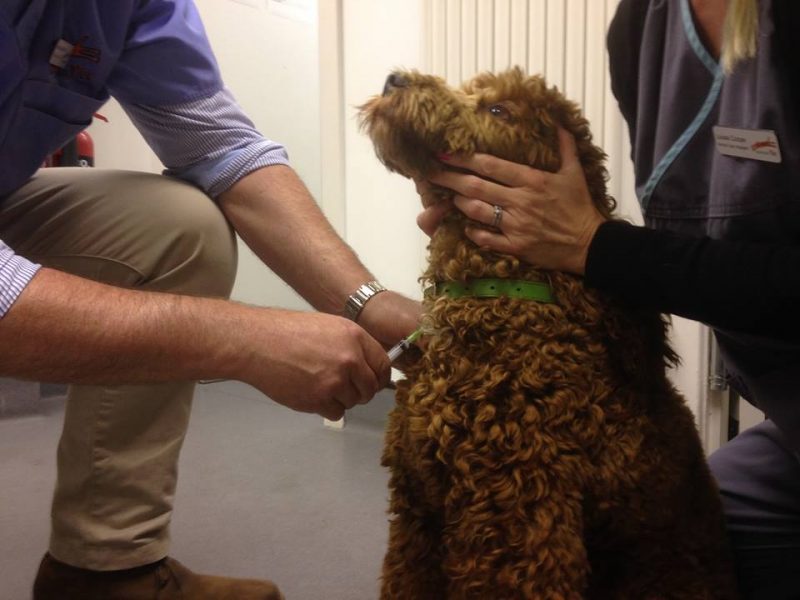
We had just seen lovely Seymour on Sunday at our Cockapoo Meet in Hyde Park. Then we heard news that he’s at the vet!!!
 He was found eating a whole pack of mince pies and his owners acted very quickly and took him to the vet!
They got him there within 15 minutes of ingestion.
The vet gave him something to make him vomit and activated charcoal to soak up the rest of the toxins followed by valium and fluids! By doing so, this prevented any possible damage to the kidneys.
He’s back home now but they still have to go in for more fluids and blood tests. He’s not so happy but it could have been a lot worse.
May’s comment: DON’T feed your dogs grapes, raisins, sultanas – any version of it. The toxic substance in grapes can cause kidney failure.
According to Vets, some of the other human foods that are poisonous for dogs are:
– chocolates contains theobromine (a bit like caffeine) – dark chocolate contains the most. It mainly affects the heart, central nervous system and kidneys. Signs of poisoning will occur from 4-24 hours following ingestion. Effects will vary depending on the amount eaten. Signs of problem include: vomiting, diarrhoea, restlessness, hyperactivity and seizures – affecting the nervous system and the heart.
– alcohol is significantly toxic to dogs and will cause vomiting, diarrhoea, decreased coordination, central nervous system depression, difficulty breathing, tremors, abnormal blood acidity, coma and even death.
– onion, garlic, chives of all forms: raw, cooked, scraps, dehydrated – such as that found in pizzas, Chinese cooking can cause gastrointestinal (stomach and gut) irritation. And this could lead to red blood cell damage.
– avocado contains a substance called Persin found in the leaves, fruit, seeds and bark of avocados. It can cause vomiting and diarrhoea.
– caffeine contains stimulants that affects dogs more than people. Ingestion of moderate amounts can lead to the same effects as chocolates.
– macadamia nuts can cause dogs to experience weakness, depression, tremors, vomiting and hyperthermia (increased body temperature) which can last approx 12-48 hours. Be aware of quantity consumed.
– corn on the cob seems like a health snack but it does not digest well in a dog’s stomach, esp if they eat part of the cob. It causes intestinal blockage due to its size and shape. Watch out for signs of vomiting, loss of appetite or reduced appetite, absence of faeces or sometimes diarrhoea and signs of abdominal discomfort.
– xylitol is an artificial sweetener found in a lot of sugar-free foods. Even very small amounts can bring on serious problems. Ingestion can bring out symptoms including lethargy, vomiting and loss of coordination, following this recumbency (unable to stand) and seizures. It can also cause fatal acute liver disease and blood clotting disorders.
– milk can cause diarrhoea or other digestive problems because they do not have the enzyme to break down milk.
– yeast dough when ingested can expand and produce gas, causing great discomfort with possible rupture of intestines and stomach.
– cooked bones can easily splinter when chewed by your dog. This can cause the bones to be stuck in the throat or stomach. However, raw (uncooked) bones are good nutrition and good for their teeth.
This is by no means an exhaustive list but are the more common foods we eat everyday. They are such scavengers that it’s easy to make mistakes.


2 Responses
A very important and potentially life saving post Darcy and May. Thanks for raising awareness about this serious issue. My boy is recovering well but it was a close call! See you soon x
Such an informative post…
Big hugs to Seymour