


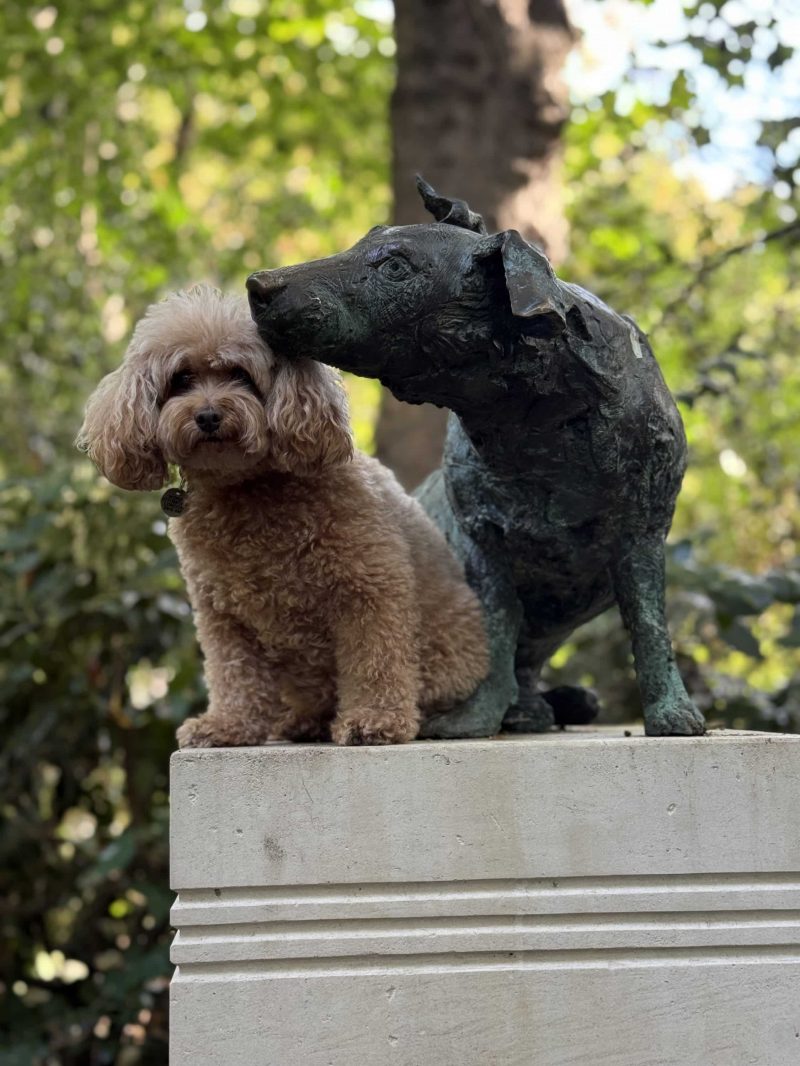
Most of us love dogs. We welcome them into our homes, celebrate their birthdays, take them on adventures and cherish them as members of our families.
Which is why many people are shocked to learn that, here in Britain, beagles are still being bred specifically for laboratory testing.
At a breeding facility in Cambridgeshire, around 2,000 beagles are bred each year for use in scientific research. Save the Dogs UK is a peaceful grassroots campaign working to raise awareness of this practice, not only to save these dogs, but also to promote the modern scientific alternatives that could make their use unnecessary.
A campaign more than a century in the making
This is not a new conversation.
More than a hundred years ago, Britain was already debating the ethics of animal experimentation. One of the most enduring symbols of that movement is The Brown Dog Memorial in Battersea Park. It commemorates the Brown Dog Affair of the early 1900s, when allegations surrounding the treatment of a small brown terrier.
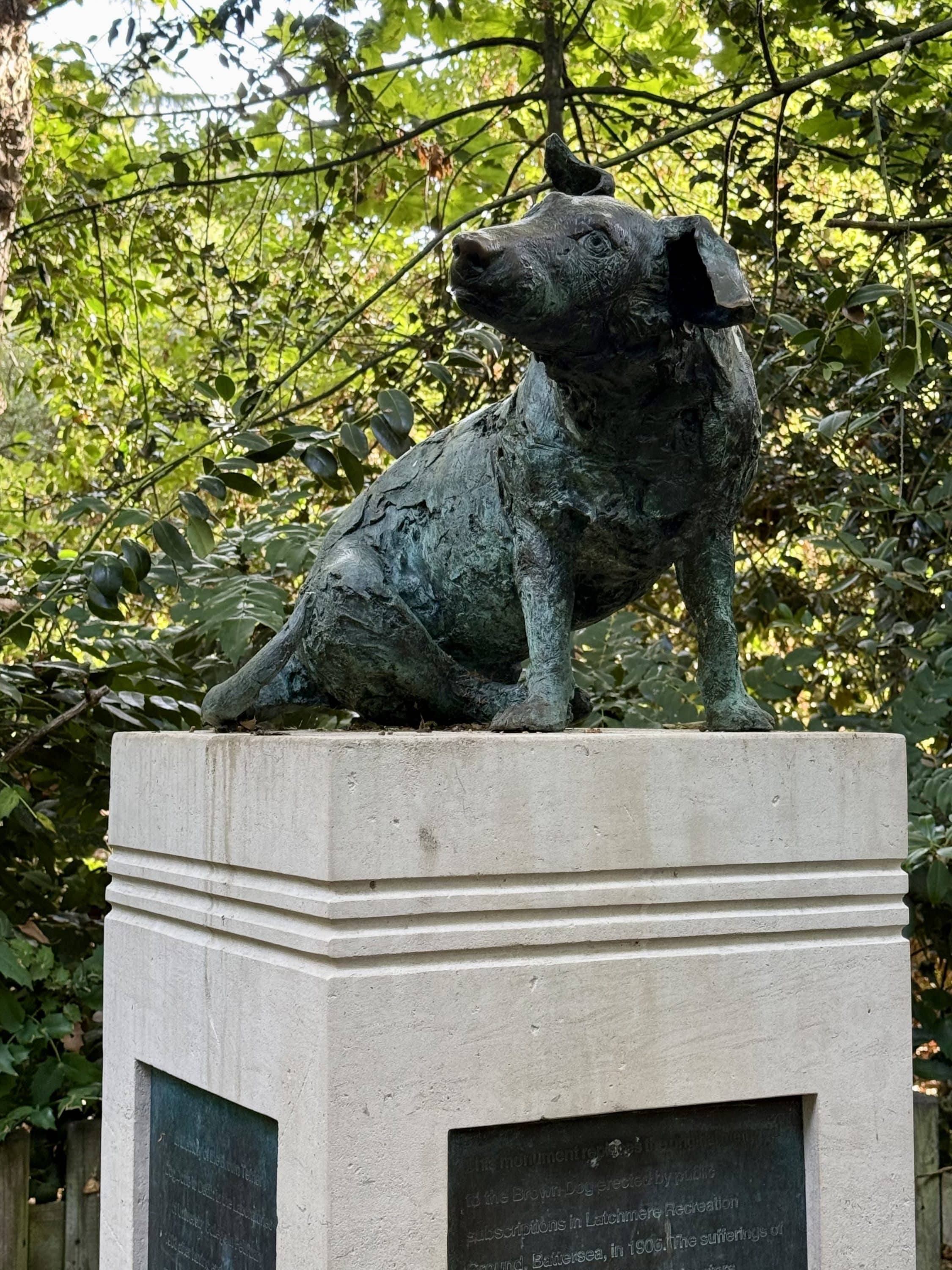
It suffered at the hands of vivisectors and sparked much protest and mass demonstrations. This monument is dedicated to the continuing struggle to end these practices.
“In Memory of the Brown Terrier
Dog Done to Death in the Laboratories
of University College in February
1903 after having endured Vivisection
extending over more than Two Months
and having been handed over from
one Vivsector to Another
Till Death came to his Release
Also in Memory of the 232 dogs Vivisected …“
The memorial stands as a reminder that the question of how we balance scientific progress with animal welfare has been debated for generations.
Today’s Save the Dogs UK campaign continues that conversation, but in a very different scientific landscape. The debate is no longer simply about whether animal testing is ethical. It is also about whether modern science now offers better, more human-relevant alternatives.
What is Save the Dogs UK?
Save the Dogs UK believes that scientific progress and compassion should go hand in hand.
Its mission is to:
- End the use of dogs in testing in the UK.
- Champion modern non-animal scientific methods that can replace them.
- Ultimately save and rehome the beagles bred for laboratory research.
The campaign uses peaceful, lawful methods including public awareness, parliamentary engagement, regulatory transparency and encouraging people to contact their MPs.
Why beagles?
Beagles became the preferred breed for laboratory testing largely because they are gentle, easy to handle and have been bred over generations to produce predictable biological characteristics. Their use was based on practicality rather than because they are scientifically the best model for human medicine.
Ironically, that predictability is now seen by many researchers as one of the model’s greatest weaknesses, because it does not reflect the diversity and complexity of human biology.
A common misconception
One of the biggest myths is that animal testing is legally required before new medicines can be approved.
According to the campaign’s briefing documents, there is no law in either the UK or the United States that explicitly requires every new medicine to be tested on animals. Instead, animal testing became the standard regulatory practice over many decades.
In fact, the UK’s Animals (Scientific Procedures) Act 1986 states that licences should not be granted for animal experiments if a suitable non-animal alternative already exists. Save the Dogs UK believes these alternatives should always be fully explored before licences involving dogs are approved.
Science is changing
Perhaps the most compelling reason behind the campaign is that science itself has evolved.
New Approach Methodologies (NAMs) are next-generation technologies that use human biology rather than live animals. These include:
- Human organs-on-a-chip.
- 3D bioprinted human tissue.
- Artificial intelligence and advanced computer modelling to predict how medicines behave in people.
Supporters believe these technologies can produce results that are not only more humane, but also faster and more relevant to human patients.
The campaign also points to evidence that dogs and humans process medicines differently. Variations in stomach chemistry, liver metabolism and kidney function can all lead to inaccurate predictions, and many drugs that appear successful in animals ultimately fail during human clinical trials.
Lessons from around the world
Events beyond the UK have also shaped the movement.
In Italy, Marshall BioResources’ former Green Hill breeding facility closed following investigations that resulted in criminal convictions for animal cruelty against senior staff.
More recently, Ridglan Farm in Wisconsin, one of the largest commercial breeders of laboratory beagles in the United States, closed after investigations into welfare failures. By August 2026, more than 2,100 beagles had been rescued, bringing an end to the facility’s six-decade breeding programme.
Campaigners believe these events demonstrate that public awareness, legal scrutiny and advances in science can together drive meaningful change.
Looking ahead
At its heart, Save the Dogs UK is about more than saving one group of beagles.
It represents a wider shift in medical research towards technologies built on human biology rather than animal models. Governments and regulators have already begun supporting this transition, although campaigners believe it needs to happen much more quickly.
Ultimately, the campaign asks a simple but important question:
If modern science can increasingly provide better, more accurate ways to develop medicines without using dogs, is it time to leave this practice behind?
Whatever your personal view on animal research, understanding the facts allows all of us to take part in an informed conversation about the future of science, medicine and animal welfare.
Because perhaps the question is no longer whether we can move beyond using dogs in research, but how quickly we choose to do so.
This Saturday, 12th September at 10:00 am, we will continue this conversation. We will start another chapter.
Save The Dogs UK peacful march will begin at this very Brown Dog Statue in Battersea Park.

From there, the peaceful march past the Royal Hospital Chelsea, Buckingham Palace, The Royal Society and Downing Street before finishing at Parliament Square. We want to call attention to the public and the Government to : Stop this cruelty. Stop harming animals in the name of experimentation. Start using updated science. Start being humane.


