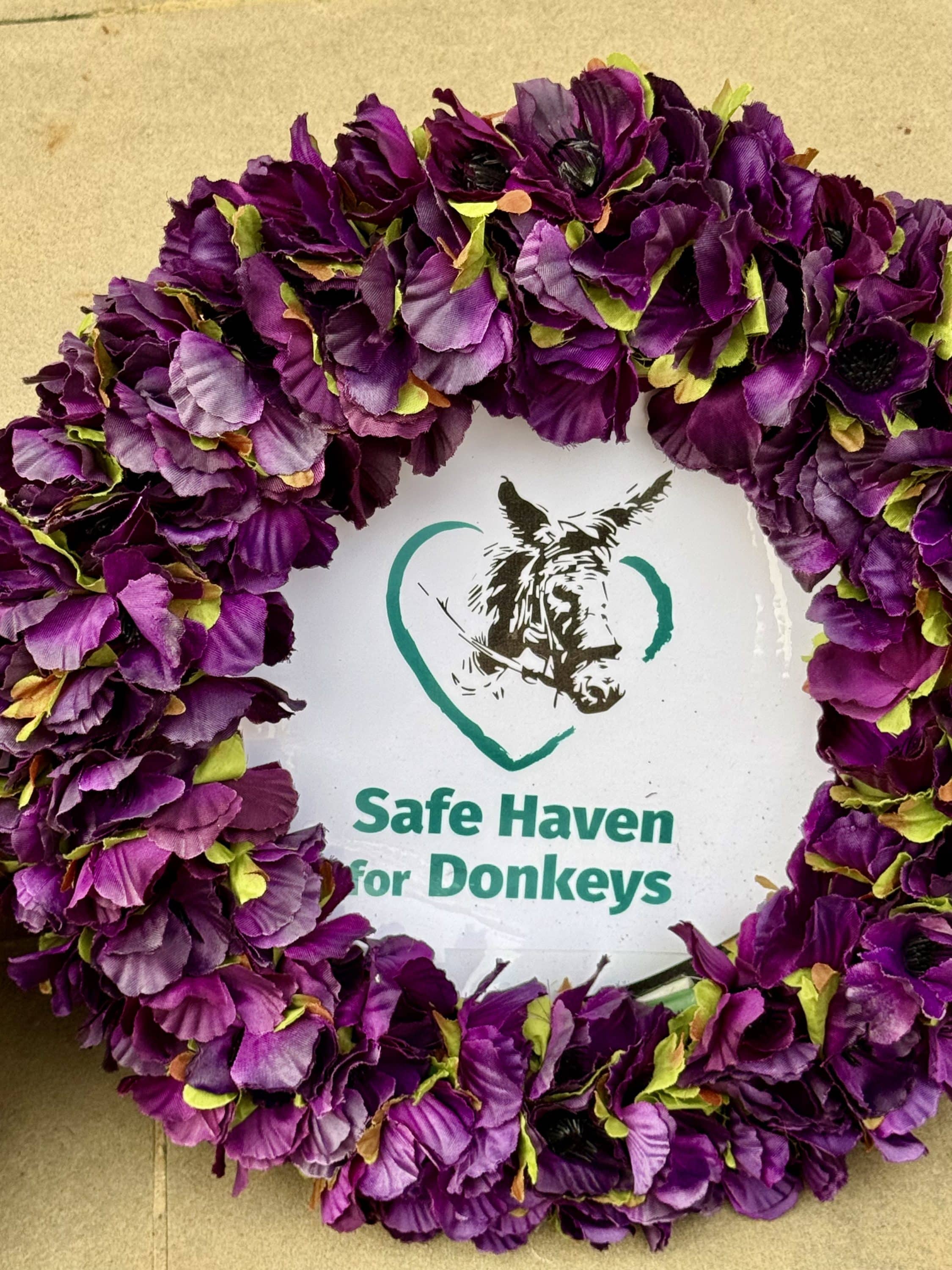
Remembering the Animals of War
An Armistice Day remembrance at London’s Animals in War Memorial.
There was a time when visiting the Animals in War Memorial on Park Lane was part of our annual Remembrance tradition.
Every year, Darcy and George would accompany me to this rather extraordinary monument, tucked away on the edge of Hyde Park. We would stop to pay our respects to the countless animals who had served alongside humans in times of war.
It was a tradition we kept for years.
But after Darcy passed away, somehow we never returned. Until this year.
This Armistice Day, George and I took Lulu to visit the memorial for the very first time.

It felt like revisiting an old tradition, but with a different little family. There was something rather poignant about standing there again, remembering the animals who had given so much, while also remembering the little dog who had once stood beside us.
And perhaps that is what remembrance is about. Honouring those who are no longer here, while carrying their memories forward.
The Animals in War Memorial
Standing on Park Lane, near Brook Gate, the Animals in War Memorial is one of London’s most moving, yet perhaps less frequently visited, monuments.
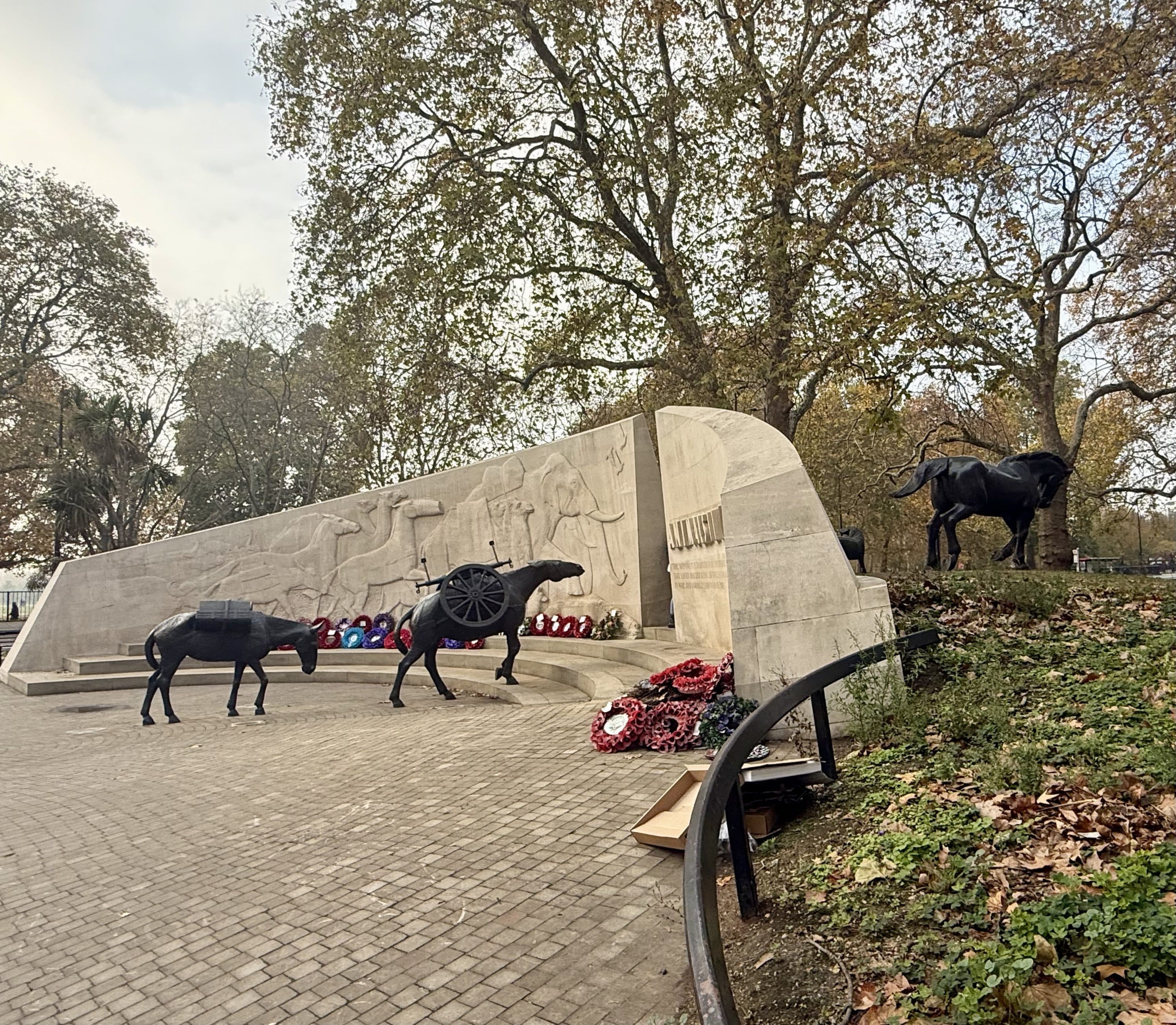
Unveiled in November 2004, the memorial was designed by sculptor David Backhouse and inspired by Jilly Cooper’s book Animals in War.
It honours the millions of animals who served, suffered and died alongside British, Commonwealth and Allied forces in wars and campaigns throughout history.
The memorial is striking in its simplicity.
Two heavily laden bronze mules struggle towards a curved Portland stone wall, representing the enormous burdens animals carried during wartime. Beyond the wall, a bronze horse and dog move forward, seemingly into a more peaceful world.
Carved into the stone are images of the many animals who played their part in war.
Horses and mules transported soldiers, ammunition and supplies, often through treacherous terrain.
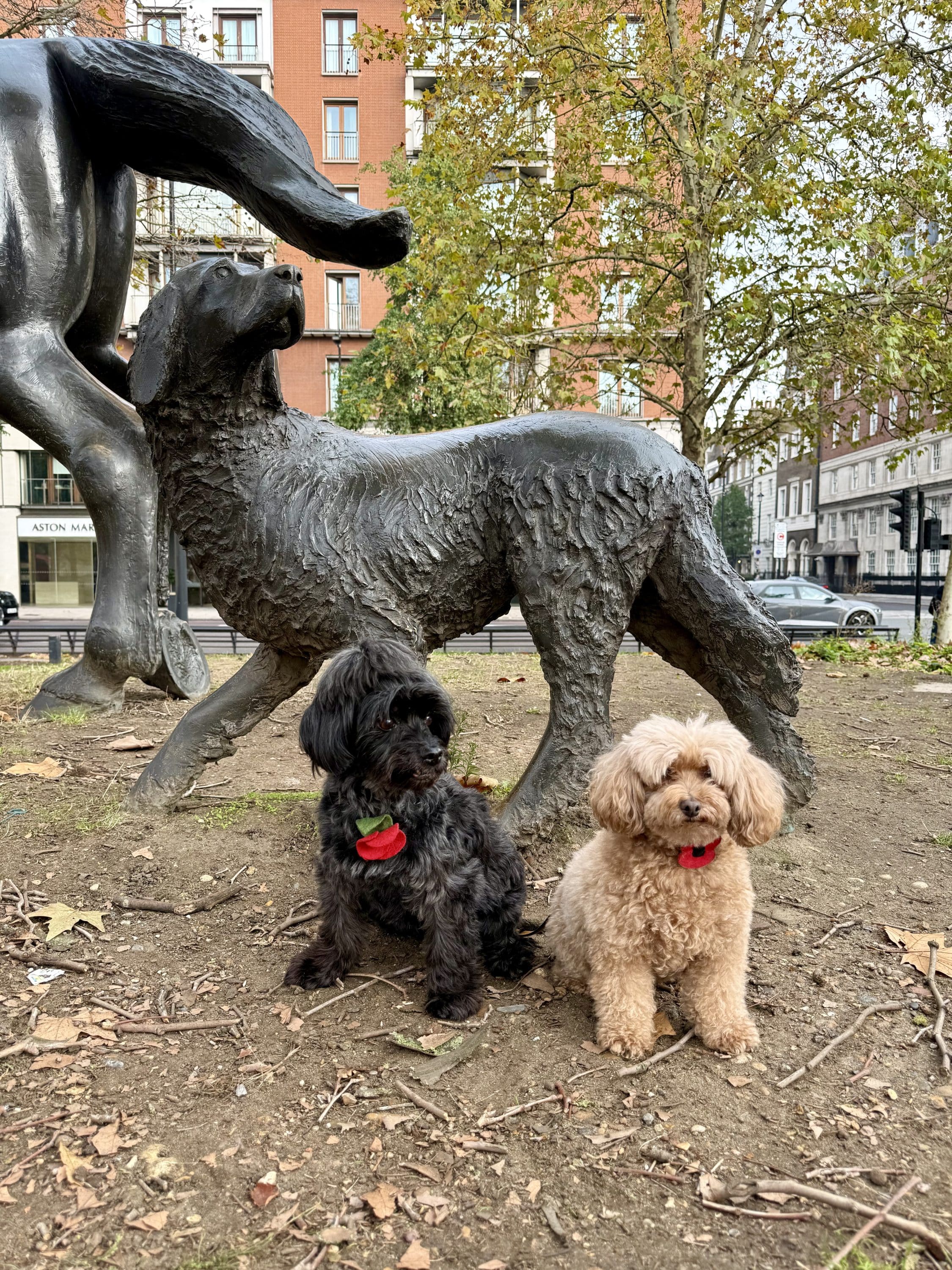
Dogs worked as messengers, sentries, search and rescue companions, and sometimes provided comfort in the most unimaginable circumstances.
Pigeons carried vital messages across enemy lines, often through gunfire and dangerous weather.
And there were countless other animals whose contributions have largely been forgotten.
They were not soldiers who volunteered. They did not understand the politics, the conflicts or the reasons for the wars into which they were sent.
They simply did what was asked of them. And so many never came home.
Four Words That Say Everything
There is an inscription on the memorial that has always stayed with me.
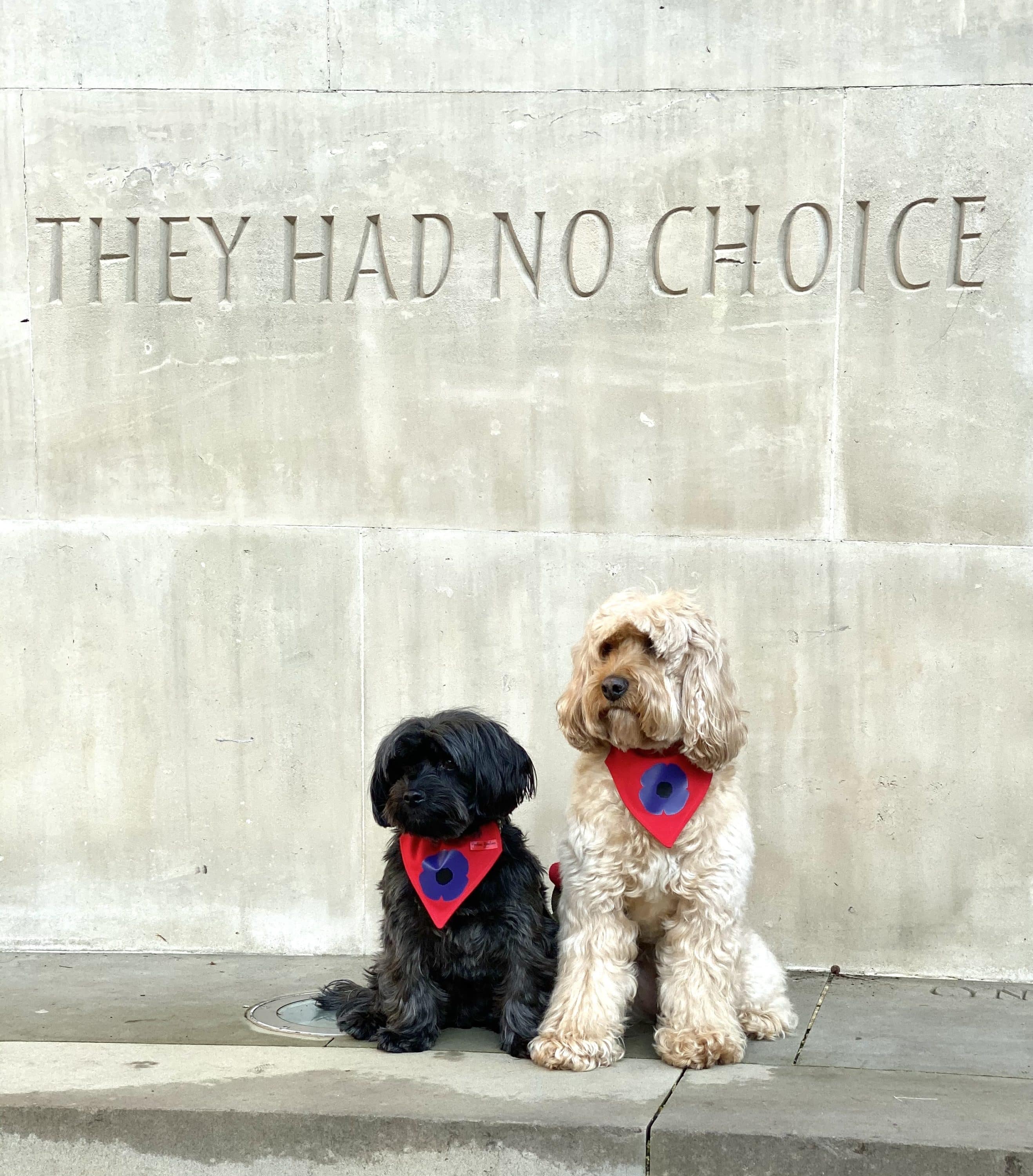
“They had no choice.”
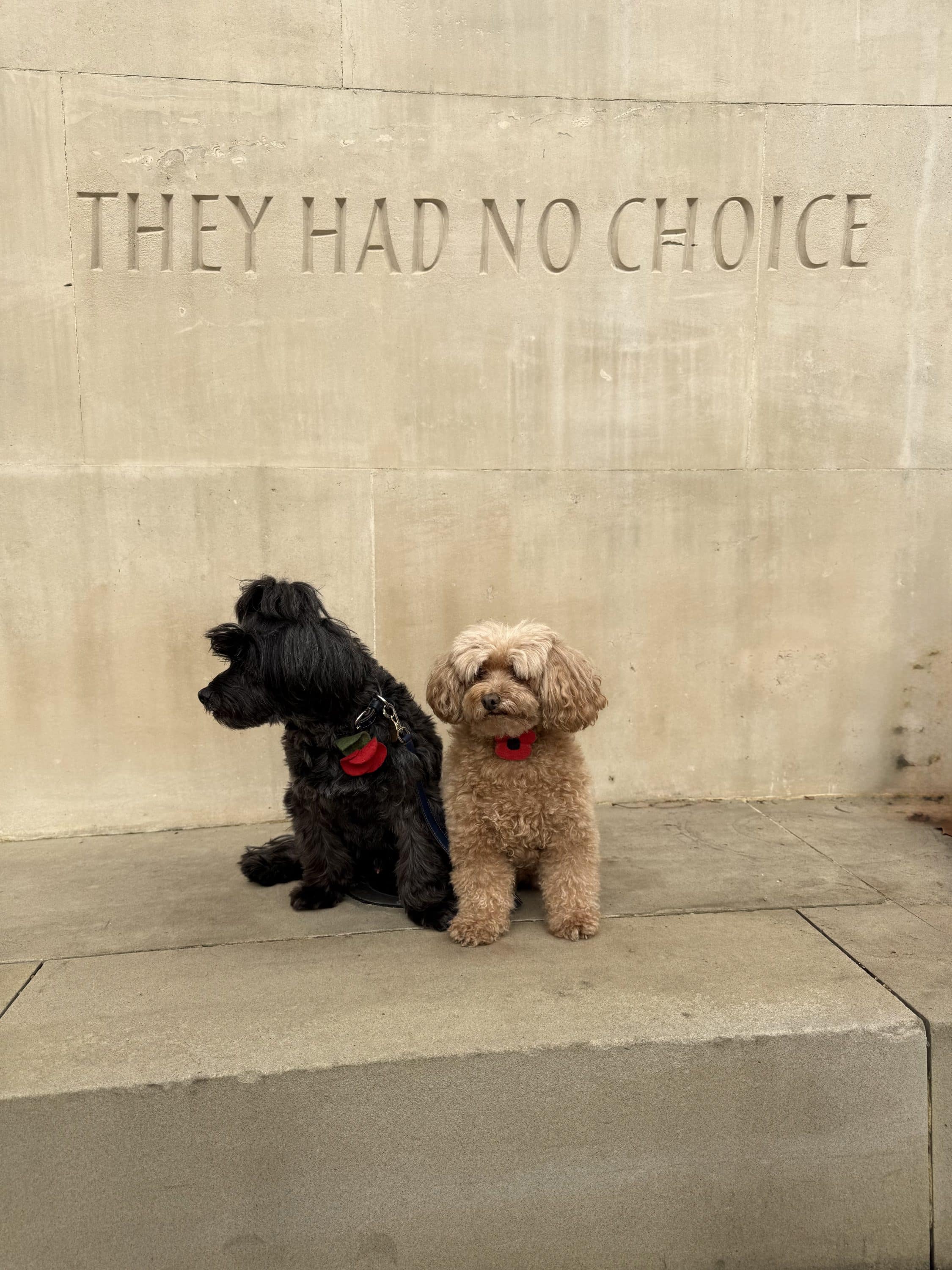
Four simple words. Yet they say more than any lengthy tribute ever could.
Animals have no understanding of the human conflicts in which they become entangled. They know loyalty, trust and companionship. They follow those they love, often into danger, without knowing why.
Perhaps that is why this memorial has always meant so much to me.
As someone whose life has been so profoundly shaped by the love of dogs, I find it impossible not to feel moved by the thought of the millions of animals whose lives were lost in wars they never chose to fight.
A Tradition Continued
This year, standing at the memorial with George and Lulu, I thought about all those earlier visits with Darcy.
I remembered the three of us coming here together, year after year. And now there was Lulu, discovering this little corner of London for the first time.
The years have passed. Our family has changed. But the reason for coming here remains the same.
To remember.
Not only the men and women who gave their lives in service, but also the animals who stood beside them.
Because their lives mattered too.
Lest We Forget
On this Armistice Day, we remember not only the men and women who served and sacrificed their lives, but also the countless animals who went to war alongside them.
The horses who carried them.
The mules who bore their burdens.
The dogs who searched, protected and saved lives.
The pigeons who carried messages of hope.
They served with courage and loyalty, often in unimaginable conditions. So many never came home.
For their service. For their sacrifice. For the lives they never chose to give.
They had no choice.
We have a choice to remember.
Lest we forget. ❤️