


Besides packing for herself, Mum has a checklist for my travel requirements.
- The Animal Health Certificate or EU passport if you have one with all vaccines and boosters up to date is one of the most important items – without it you can’t travel and you definitely won’t be allowed back in.
- A carrier for use on planes or trains.
- Travel blanket for the carrier also useful during our travels if we ever needed something to lie on.
- Essential poo bags to last the duration of our travels
- Collapsible dog bowl – for ease of packing and to use during the journey. Also handy if the hotels do not supply bowls, though they usually do.
- With the bowl comes food! We use Ella&Co. freeze dried food for our travels.
- My Mungo & Maud mouse for those times when Mum leaves me on my own.
- I’ve got a dig tag with a Union Jack and inscribed on it Mum’s +44 (UK) mobile number.
- And just in case, I have an Apple AirTag
- Oh, depending on the season, Mum would pack a jumper, a jacket or an Equafleece. Or sometimes a bow tie or two! LOL!

May’s comments: I am always in search of new boundaries to cross. And as I would much rather travel with my dog than not, the first challenge is finding a dog friendly hotel and then figure how to get there.
Together, with Darcy and/or George we have been to 30 countries and counting … we have crossed boundaries by car, rail, sea and air.
Travelling abroad with a dog does require a lot of preparation and added costs. On this blog I am going to focus mainly on travelling between the UK and Europe/Northern Ireland .

Here’s an attempt to help answer the questions asked every time we blog about our travels. All this is based on our personal travel experiences. Before I get to the logistical aspect of planning, here are some practical things to keep in mind.
- Before you begin your journey, build in ample time for them to have a little walk so they can go to the toilet. You must be confident that they can hold for the duration of the journey. That’s one of the reasons they do not allow puppies to fly – as we know they need to go frequently. Because even if your flight is just two hours – there’s the two hours checking in, a lot of busy activites and excitement going through security. And potentially long immigration queues at the other end, not to mention waiting for luggage before you exit the terminal. If your dogs can last a whole night, they should be ok to travel.
- As soon as you can, take your dog out of the carrier after leaving the airport to a place where it can release itself after the journey.
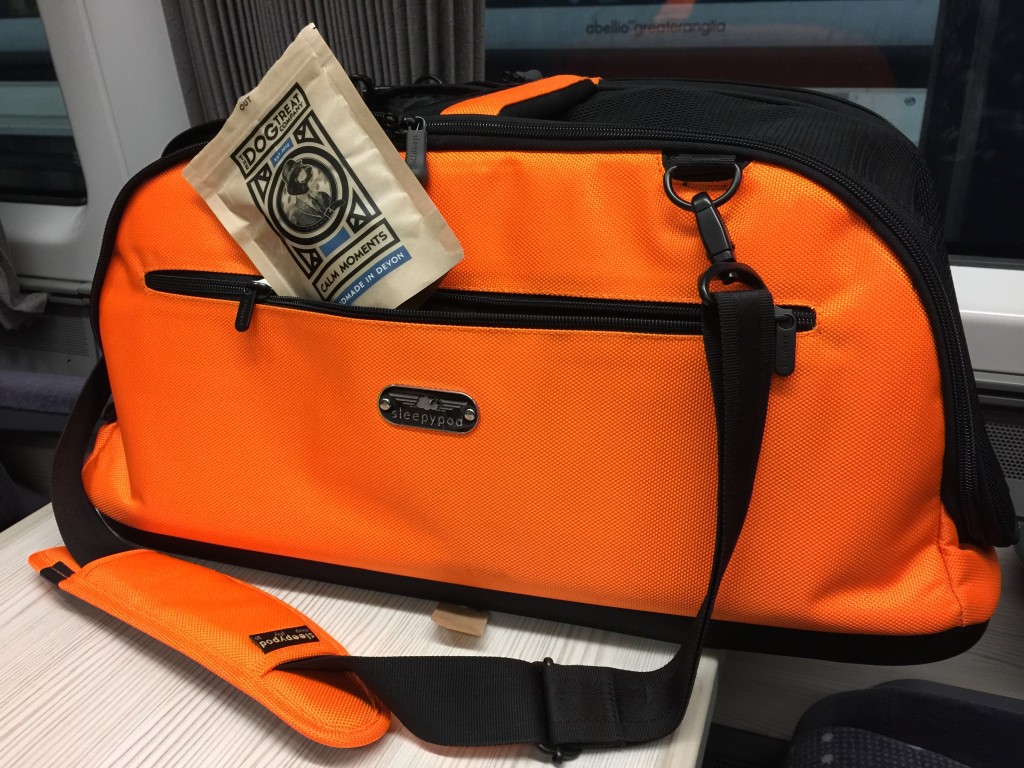
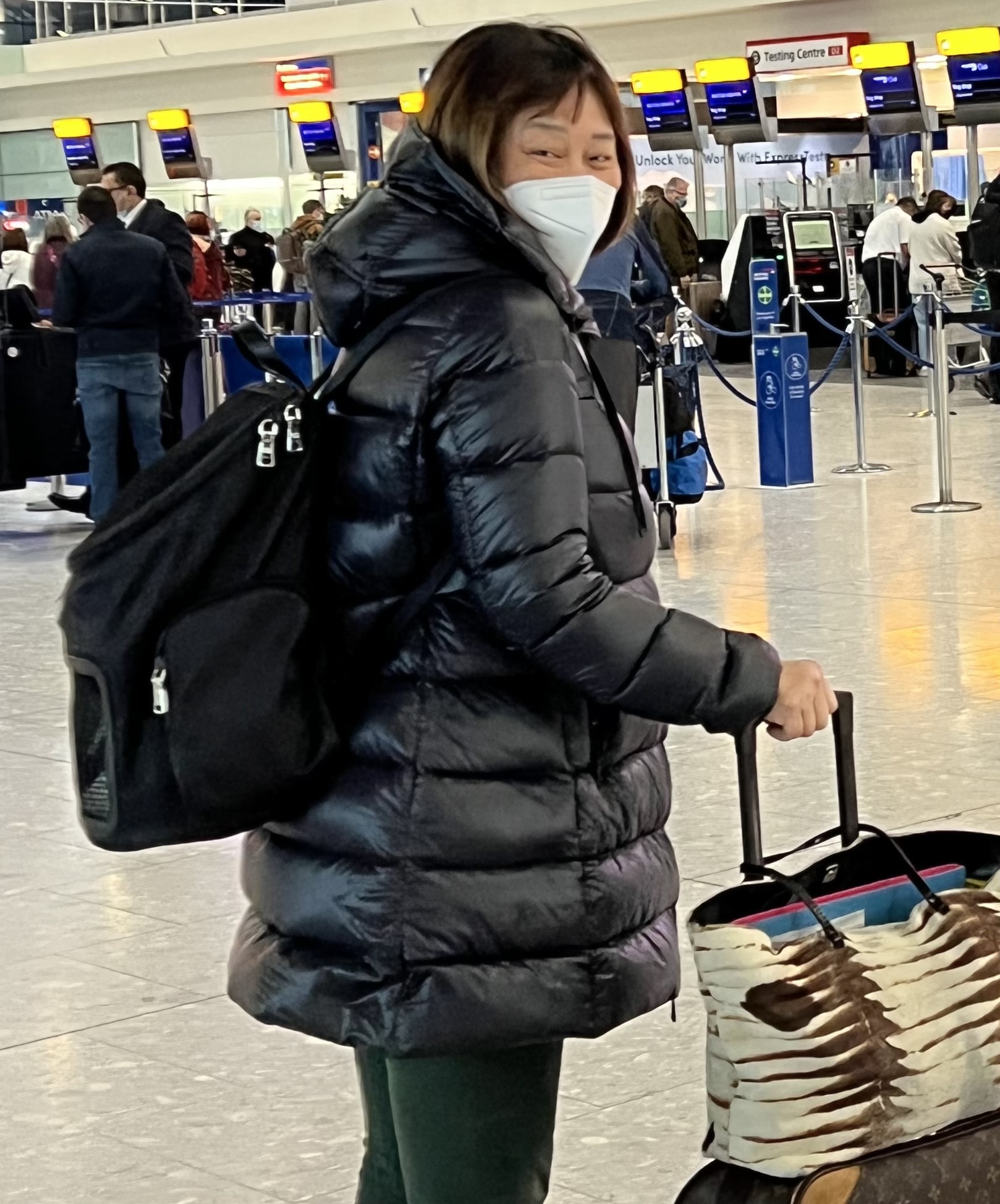
- I have used two types of carriers – one from SleepyPod and this bag fits the dimensions of all airline requirements. George fitted into this nicely. But I prefer using a dog backpack carrier. It frees my hands and also the weight is distributed between the shoulders.
- The taking off and landing is quite unnerving for the dogs. Even placid Darcy would feel unsure of the situation. I always put my hand inside the carrier during landing and take-off just to reassure them I am there.
- If you are travelling on your own with your dog, there will be things you won’t be able to do with your dog. It’s a matter of choice. Of course there are hotels that can provide dog-sitting/walking services. I have done that sometimes but then I chose to travel with my dogs for a reason – I like their company.
- If your dog is small enough to fly in-cabin you do not need to be an Emotional Support Animal (ESA) to fly. Besides European Airlines no longer accept ESAs when flying within the continent. To get an ESA you need to have consulted with a psychotherapist and possibly a letter from your doctor.
- Something to consider before you even think about taking them – will the climate be suitable for your pet. I would not travel to warm places during the summer months and besides, it is always nicer to travel during off-season.
Please feel free to comment and if there are any misinformation. This is told from our own experiences. So here goes …
Documentation & Vaccinations – Since the EU stopped recognising the UK pet passport, you will need to get your dog an Animal Health Certificate (AHC) from the vet to enter the EU and Northern Ireland. At the moment, it is costing £200 per travel. It has to be used within 10 days of being issued. You can cross multiple boundaries with it but it is valid for four months for the date of issue.

In order to have a valid AHC, your pet needs to be up-to-date with all its essential vaccinations and boosters. The most important one being rabies for Europe and particularly for your return to the UK.
Just to be sure check the policies of the countries you will be travelling to and also ask your vet. Some of the countries also require deworming before entry.
Before returning to the UK, your pet will need to visit a local vet for a health check and deworming at least 24 hours before returning and not more than 5 days. Make sure the local vet has filled in the date and time correctly.
When travelling with the Animal Health Certificate, familiarise yourself with the pages where the rabies vaccine are recorded in case the EU vet or airport staff are not familiar with the AHC. It happens.
Even though it is not totally by the book, vets and officials at crossings will suggest you try to get an EU passport especially if you travel often to the EU. You can ask a local vet to do so. Some will say it is not allowed but many are doing it. Just ask. And when you do have an EU passport you will need to have all vaccines updated annually in a European country. UK vets are not permitted to make any entries in a EU passport. Do not let the boosters lapse.
The Journey to Europe be Air In-Cabin, Train/Car or Ferry
a. By Air In-Cabin – Due to George’s size and weight, I have the option to fly him on most European airlines in-cabin. This cuts down travelling time considerably as well as allow us to go to places which we otherwise could not have accessed by rail or car.
When booking your flight tickets online, you need to call the airline to tell them that you will be flying with your pet. They will go through a list of questions about weight, size, carriers and they have to check if the flight had reached its quota for pets in cabin. Only then they will confirm that your dog is allowed to travel with you. It is usually not a problem but just precautionary for them as they do limit the number of animals per flight. They will usually ask for payment for the additional fee for your pet – usually around £50.
European Airlines have long abandoned ESA (Emotional Support Animals) which means to fly in-cabin, the general rule is the pet plus carrier must be at most 8kg. There is the odd airline that allow 10kg.
At check-in, they usually ask to see the health documents or passports. Most of them will ask to have the dog in the carrier and weighed.
The pet must stay in the enclosed carrier when boarding and for the duration of the flight. The carrier must be on the floor.
No puppies and most airlines discourage snub- nosed dogs.
These are the airlines we have flown with to-date, out of the UK as well as within the continent.
- Aegean
- Air France
- Air Malta
- Alitalia
- Iberia Airways
- KLM
- Lufthansa
- SAS
- SwissAir

Even though the basic rules are the same, each airline, each plane, each crew member interprets them slightly differently. I always expect some question and discrepancy. I am always prepared to answer all questions.
For eg. most dog carriers are usually sling carriers but I have a large backpack where George sits curled up and in which he can sit up without any difficulty. They are usually surprised by this unconventional mode of carrier. They will ask to see the pet in its carrier enclosed. And they will weigh the pet with carrier.
From my own experience the backpack is a life saver – it frees my hands and distributes the weight evenly. For even though George weighs 5.5kg it gets weighty after awhile, carrying him on one shoulder while walking through airports and stations.
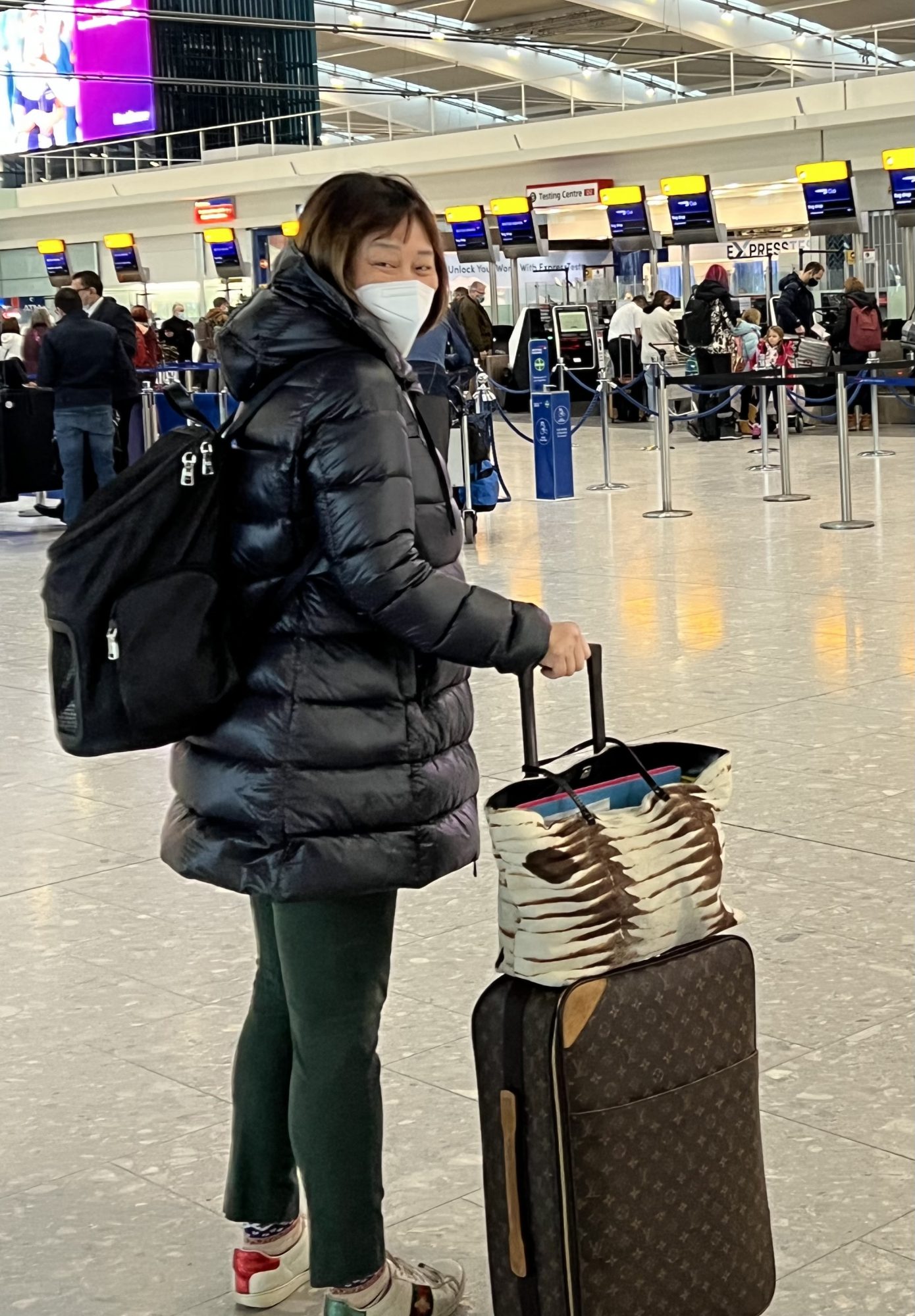
Also carrying him in a backpack avoids the prying eyes of Custom Officers. Even though all checks have been made at check-in, some of them just can’t help themselves and want to make sure.
Going through security is different at each airport, even within the different terminals at Heathrow (I have never flown out of Gatwick) – staff at one terminal will say dogs must be in carriers and another will say it’s ok till they are through security. You get to security and they say – the dog must be in the carrier. And then you have to take them out when going through the metal detector. Just be flexible and do whatever they ask. At security, collars have to be removed – in some cases, they will ask the dog to walk through the metal detector. I used to love watching Darcy to that – to the amusement of other passengers. In other instances, they take the dog across. On a recent journey, I walked through and having determined that it’s my hips that beeped and nothing sinister, I was asked to walk back to get George. So it is always different at every airport security. Just go with the flow. Be calm. It’s noisy and busy – and your dog will need guidance form you on what is happening. Once through security, in most European airports, they can walk. In Heathrow, I put them in the open carrier and use a trolley.
b. Crossing the Channel by Car/Taxi or Train The campaigns to get Eurostar to allow pet travel has been unsuccessful to date.
For people like me who do not like driving, you can do the crossing by taxi on the Eurotunnel Le Shuttle.
Folkestone Taxi has been providing this service for a very long time and they know the process required for bringing a pet.
The Taxi will pick up from Folkestone train station and cross over to Calais Frethun (better than Calais Ville in my opinion) on the Eurotunnel Le Shuttle.
The cost includes the driver’s going and coming, the Eurotunnel Le Shuttle crossing fee, plus pet fee (£22). The crossing fee varies according to volume of travel on the chosen date. The best part of this – your dog stays with you the whole time. Ask Folkestone Taxi for a quote.
At Calais Frethun, you make connecting trains usually via Paris to most destinations by train.
And if you needed them to, Folkestone Taxi can drive you door-to-door. Maybe a bit extravagant but if you have at least two passengers on the journey, it is almost worth it so you don’t have to hold onto the leash(es), lug your bags, change trains and get a car to take you to your accommodation.
Almost all European trains allow dogs. Unlike the UK, you have to pay for their pet travel. It varies by country but the cost of the ticket depends on whether the dog is in a carrier (small) or not. If not it is usually the price of a second class child’s ticket.
In some countries you can’t print out the pet ticket. It needs to be picked up at the station’s ticket office. That means needing to build in the time for long queues.
In some of the Nordic countries, there are designated dog compartments.
Others require dogs in carriers on trains. Unless they are small dogs, it would be cumbersome carrying a crate for dogs the size of Darcy. For that reason, I had not taken Darcy to Spain nor Portugal.
Do not be alarmed when you read that your dogs must be muzzled unless they are in carriers. I have never done it – only once in Germany when we were making a connection, the bus driver asked me to muzzle Darcy but the train manager intervened. The bus driver reluctantly let the matter slip.
c. By Sea Ferry with car or on foot.
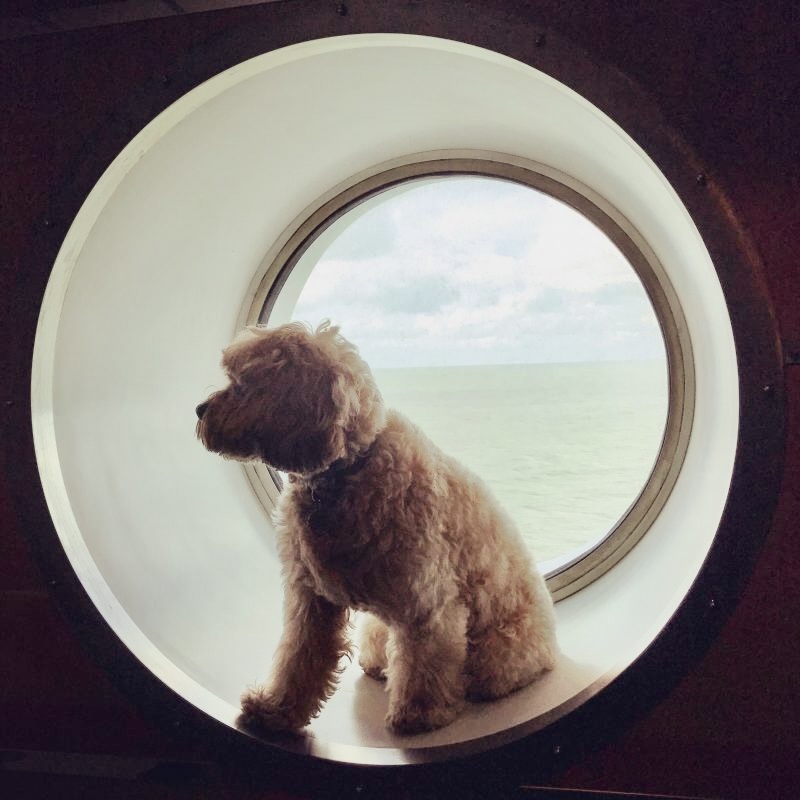
We have only crossed the channel with Stenaline between Harwich International and Hoek van Holland.
You can take your car onto the ferry or go as a foot passenger.
On the UK side, as a foot passenger, you arrive at Harwich International train station and it is adjacent to the ferry terminal.
In Holland, they had recently reinstated the train service. When you disembark from the ferry (via a very long ramp) and the train platform is right outside. Within minutes the next commuter train would arrive at the station.
The best news is they have recently introduced Pet Cabins on the Holland crossings!!!
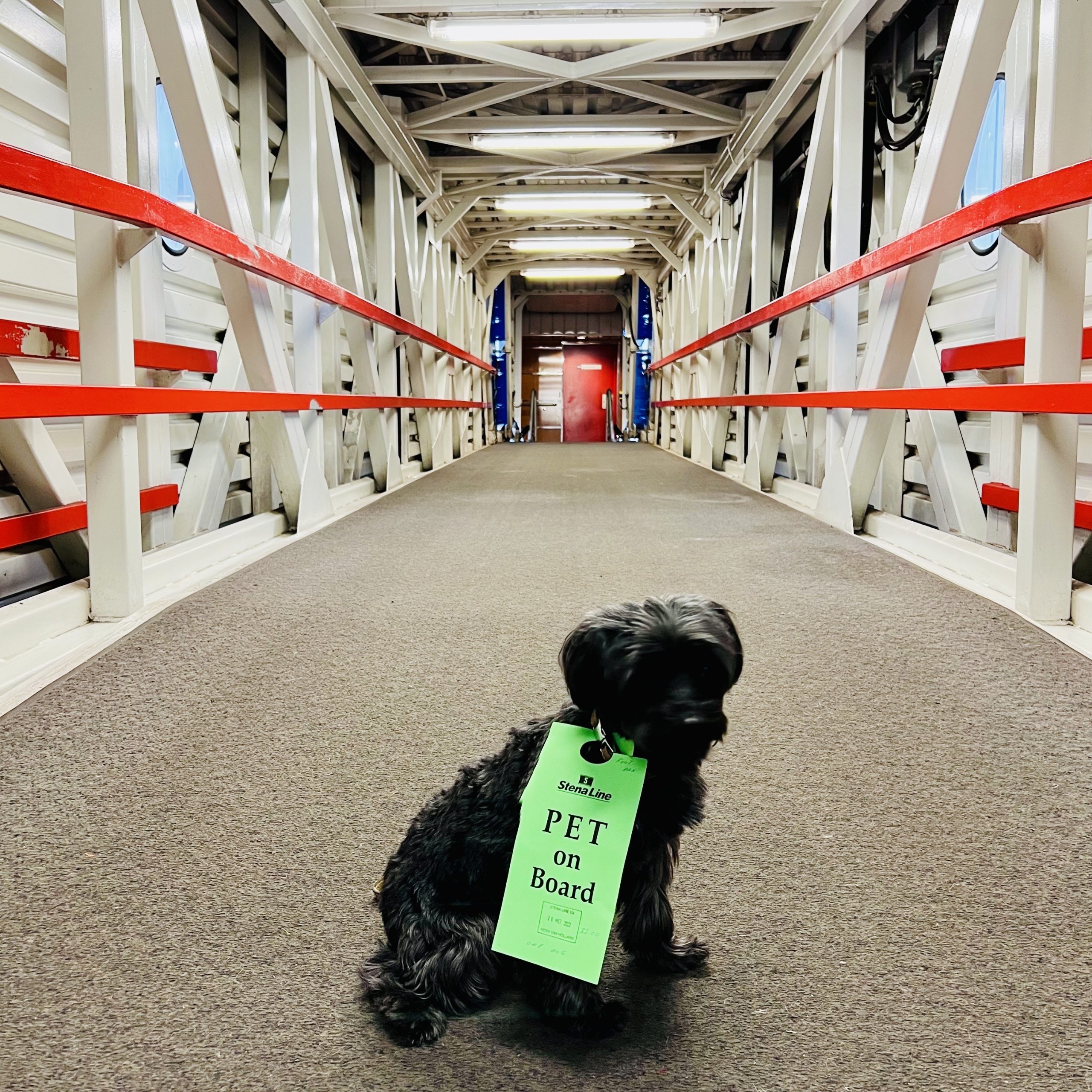
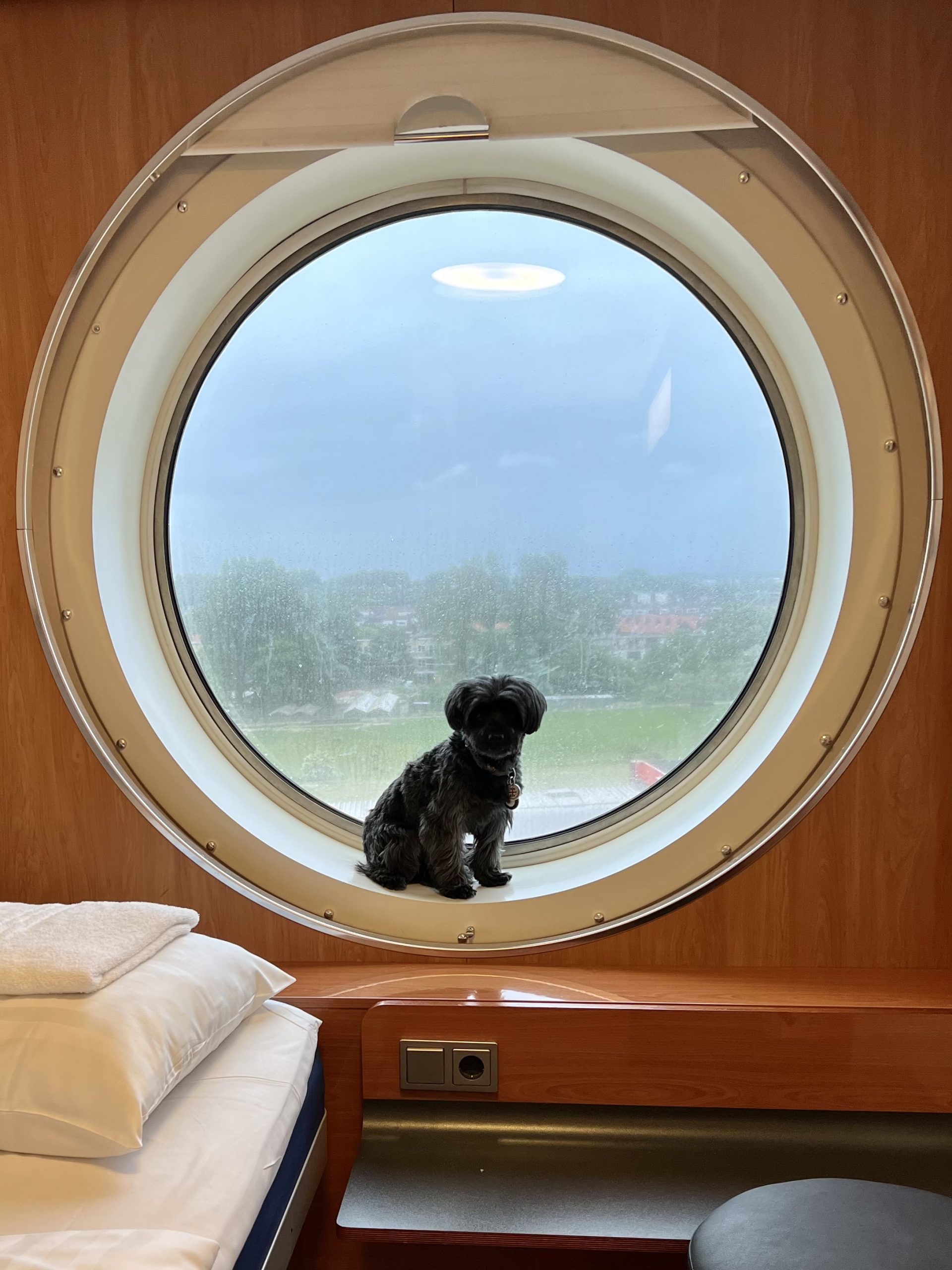
What a difference it has made for our last crossing – I was so relaxed and chilled having George with me. For him too, I bet. In the past, I would have to carry my luggage up a vary long ramp with two dogs on leads. We take the lift to check in at Guest Services on Deck 9, then take them down to the kennels on Deck 8, settle them in amidst the barking of the other dogs. Darcy and George wasn’t happy and only because all the dogs were barking, they joined in – and that was distressing for me too.
To get Pet Cabins – book them way in advance. There are usually quite a few dogs on each crossing.

There is a ferry service with pet cabins to Santander, Spain but I have never taken that route.
On Arrival – Travel/Transportation. To avoid any unnecessary complications, I always pre-order a taxi or hotel car, letting them know you have a dog. In most cities/towns, particularly in France, the drivers refuse to take dogs. It is easier if the dog is in a carrier. You really don’t need that headache.
We have stood many a time at the taxi rank at Gare du Nord. Each driver avoiding eye contact with us when they see me with a dog. We have since found that G7 taxis in Paris who can request drivers who allow dogs in their taxi.
Hotel Charges. Most hotels do charge an extra fee and they normally provide a dog bed(s), bowl – the ones who understand dogs usually have one for water and one for food. They often have some form of treats. Seaside hotels even supply beach towels. The cost varies by hotel.
Their explanation for the added costs is either for the bed and for deep cleaning. Some charge per stay while others charge per night. When they do, I always challenge them on that. Of course they do not deep clean till after you’ve checked out. Besides I don’t need a deep clean while I am staying there. And I always say, my dogs are usually cleaner than most kids. Challenge them nicely. Often they get the gist or they will just say that’s the hotel policy.
There are so called “dog-friendly” hotels that do not allow dogs in any of the restaurants and not even in the lobby. When booking a hotel, I always ask where I can dine with them. And if not, you can choose either room service or make sure your dog can be left in the room if you dine in their restaurants. Or ask the hotel to help you find dog-friendly restaurants.
Returning to the UK. You cannot fly in-cabin with your pet back to the UK. Yes, it is some archaic law. And I suppose the state of world affairs in recent years preceded any pet travel reform.
So how do we return to the UK? Two ways – by ferry or by the Eurotunnel Le Shuttle.
If flying, we get to Paris or Amsterdam and …
i. From Paris, take the train to Calais Frethun and have Folkestone Taxi meet you there to cross the Eurotunnel.
Pet checks are done before crossing the borders on the side of France. If for any reason your pet has not met the requirements, you will be disallowed to proceed with your. You will need to go to a nearby vet and wait for the right amount of time before crossing.
There are also Pet Areas for your pet to exercise and do their business before carrying on the journey through the tunnel.
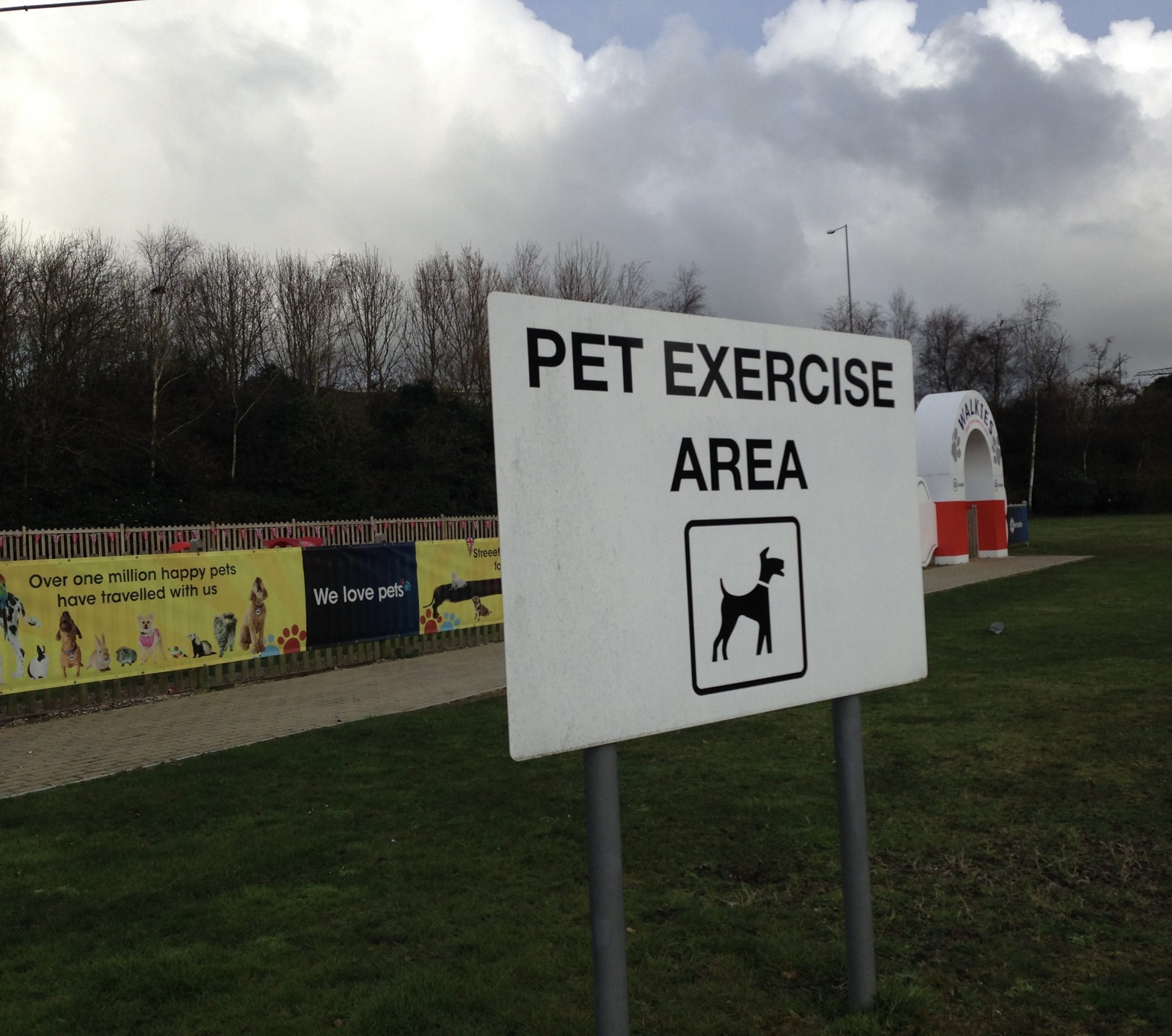
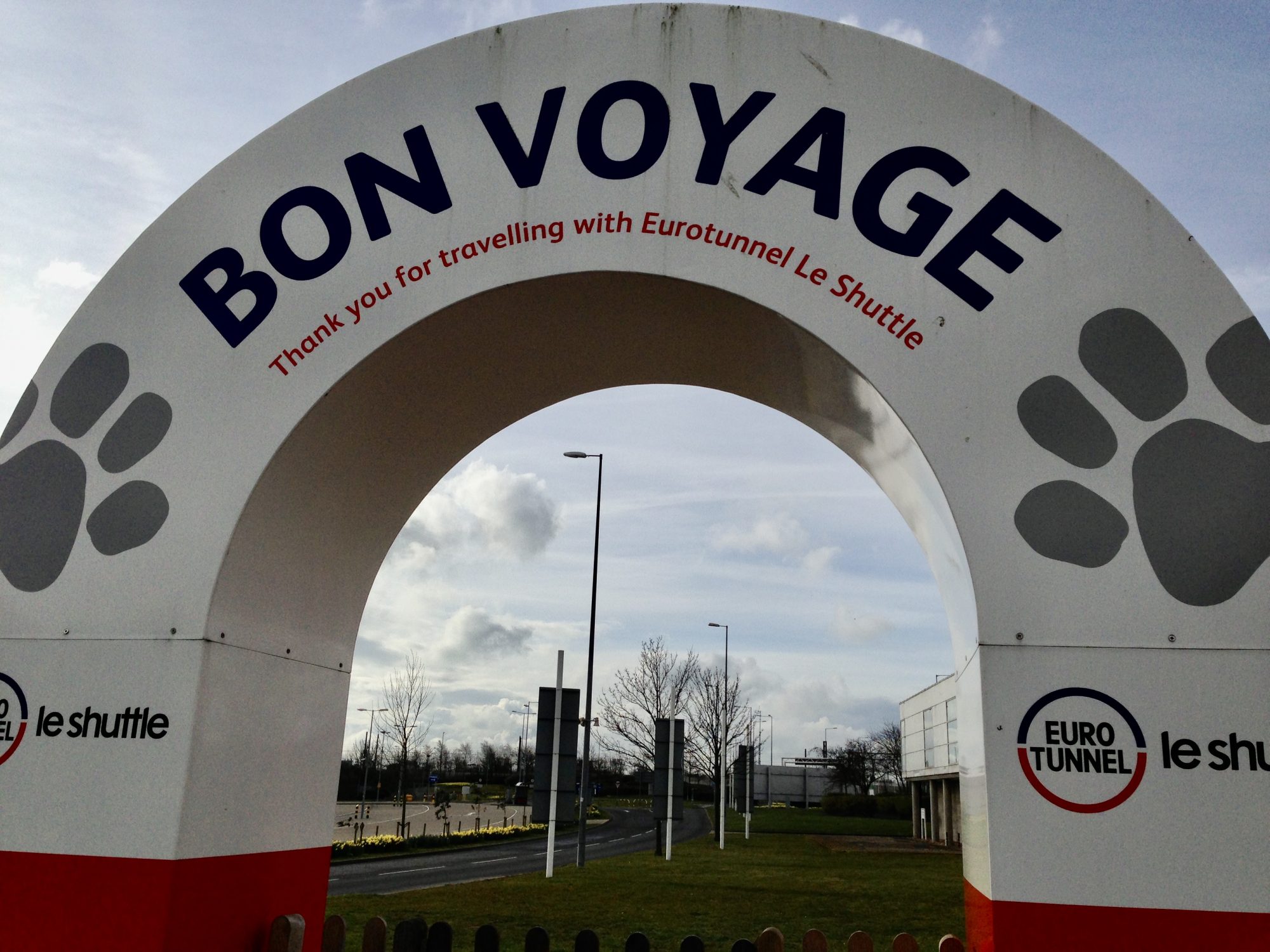
The crossing is only about 35 minutes but it is so you can just carry on after you emerge on the other side.
ii. From Amsterdam, take the train to Hoek van Holland for the Stenaline ferry crossing.
Again, the pet microchip and documents are reviewed before checking in. And if the requirements have not been met, you will not be allowed to embark.
Once back on England soil, there are train connections from Folkestone or Harwich International. Pets travel for free on UK trains.
So have I put you off from travelling with your pet?
It does require a lot of planning and even after having travelled with them for almost a decade, I still worry every time we set off – have I got everything I need? It can be overwhelming, but it gets easier once you’ve done it. Personally, I would go through whatever hurdles to take them with me because I know I will enjoy my holidays better with my dogs than not.
Have courage. You can do it. And once you’ve done it, you will want to do it again because the bonding during our travels is the best part of it.
Feel free to ask any questions. We write our blog to show our readers it can be done and to encourage to live and enjoy life in as many ways as you can with your precious pets. I love to travel and I had said from the very beginning that having a dog should not stop me from living the life I want to live. That made me sought out ways to take them with me. And when I can’t I found them the bets places where they were happy, i.e. House of Mutt, or with friends in the countryside.
BON VOYAGE. SAFE TRAVELS. GUTE REISE. BUON VIAGGIO. BUEN VIAJE. BOA VIAGEM. GOEDE REIS. MILEJ PODROZY. KALO TAXíDI.


8 Responses
Thank you so much for explaining what to
me has been very complicated particularly post-Brexit. I’m planning on taking my girl to Brussels to visit my daughter so v helpful
Happy to help whenever you are in doubt.
Wow! This is all very informative. I need to find out about similar requirements here in the U.S. at some point for our 4 (yes, four) dogs. I also love the photos of George, and the old photos of Darcy. Happy travels!
Thank you for such a great post!! It makes me want to set out with Harvey and Pippa on a fun adventure!!
When I flew back to the US with Pippa back in 2014, it was quite an ordeal. It put me off air travel. But this makes me want to try again with more confidence!!
We need a AHC now to travel to Northern Ireland as I checked with the NI tourist board.
Yup! That’s right. When we went last month, they didn’t check anything,
Thank you so much May. This info will be invaluable as we intend to take our cockapoo Saffi travelling to Italy (via euro tunnel using our own car) with family next year 2023. As it’s such a distance we’ll have to break the journey up as we travel. Then we’re planning to hire a self drive river cruiser so it’ll be an ideal doggy holiday. We’ve already taken Saffi on a boating holiday along the river Lot in France pre lockdown and it worked out perfectly. Can’t wait to repeat the experience in Italy. 🐾😊🐾
Fabulous! Enjoy! And if you have any tips that I can add to the blog, let me know!