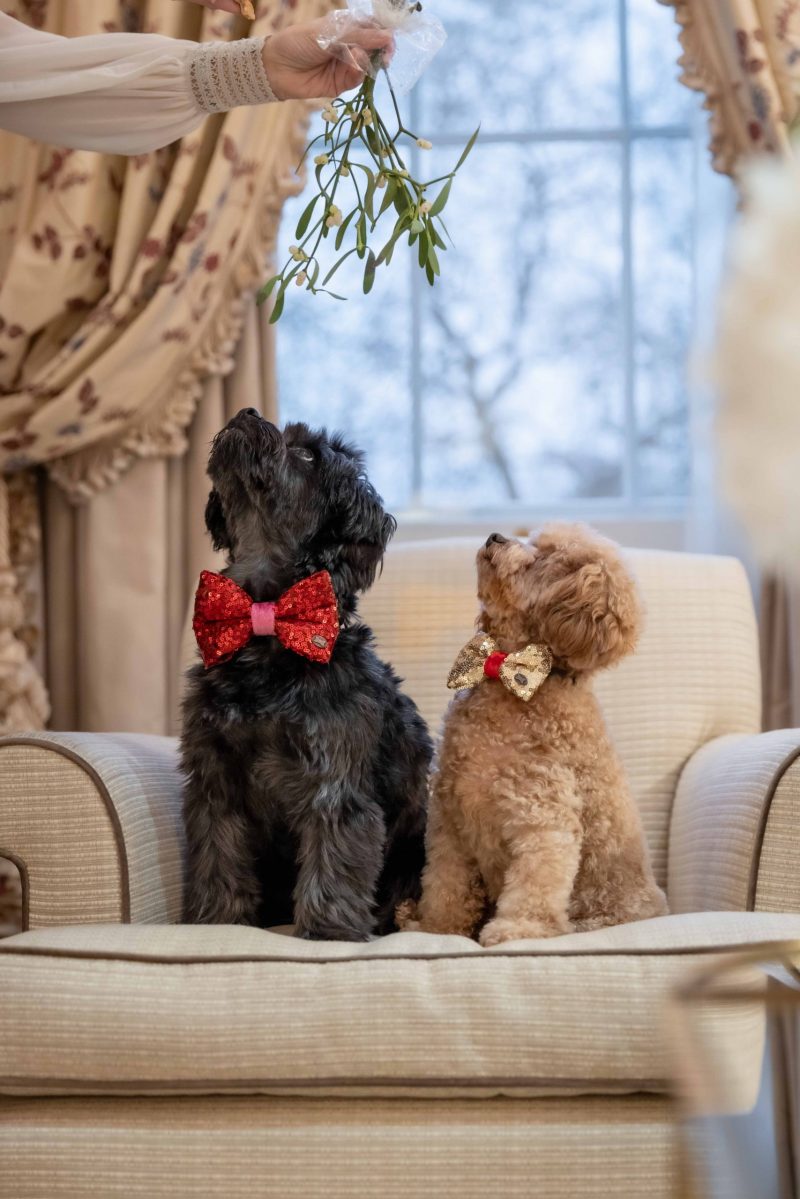
Lulu, there’s a mistletoe over us. You know, it is customary for boys to kiss any girl under it.

And if you refuse the kiss, it is considered bad luck.

Shall I kiss you?

Lulu! I didn’t say French kissing! Ppp-LEASE!!!

May’s comment: The tradition of kissing under the mistletoe has ancient origins and has been associated with various cultural and religious practices over time. The use of mistletoe as a symbol of love and fertility dates back to the ancient Druids, who believed that it had magical properties and could bring good luck and ward off evil spirits.
In Norse mythology, mistletoe was associated with Frigg, the goddess of love and beauty. The story goes that Frigg’s son Balder was killed with an arrow made of mistletoe, and Frigg’s tears turned the red berries of the mistletoe white. After this tragic event, Frigg declared that mistletoe would never again be used as a weapon and would instead symbolize love.
The custom of kissing under the mistletoe gained popularity during the Victorian era in England. It became a part of Christmas celebrations, and a tradition emerged where a man could kiss any woman standing under the mistletoe, and refusing the kiss was considered bad luck. This tradition has persisted and evolved over time, with people often using mistletoe decorations during the holiday season as a playful and festive way to share kisses with loved ones.
While the specific traditions and beliefs surrounding mistletoe may vary, the act of kissing under the mistletoe is generally seen as a lighthearted and romantic gesture during the Christmas season.
I would kiss these two under the mistletoe any time.